Terri Windling
Books: Fantasy | Editor
The Wood Wife (1996)
Borderland: Where Magic Meets Rock and Roll (1986), The Essential Bordertown (1998)
Snow White, Blood Red (1993), Black Thorn, White Rose (1994), Ruby Slippers, Golden Tears (1995), Black Swan, White Raven (1997), Silver Birch, Blood Moon (1999), A Wolf at the Door (2000), Black Heart, Ivory Bones (2000), The Green Man (2002), Swan Sister (2003), The Faery Reel (2004), The Coyote Road (2007), Black Swan, White Raven (2008), Troll's Eye View (2009), The Beastly Bride (2010), Teeth (2011), Queen Victoria's Book of Spells (2013)
Editor of The Year's Best in Fantasy and Horror as well as several anthologies based upon Folk and Fairy tales.
Seeing as how I am particular to folk and fairy tales, I enjoyed these, although I think I prefer stories that read like folktales, rather than reading a folktale rewritten for modern readers.
The Wood Wife (1996)
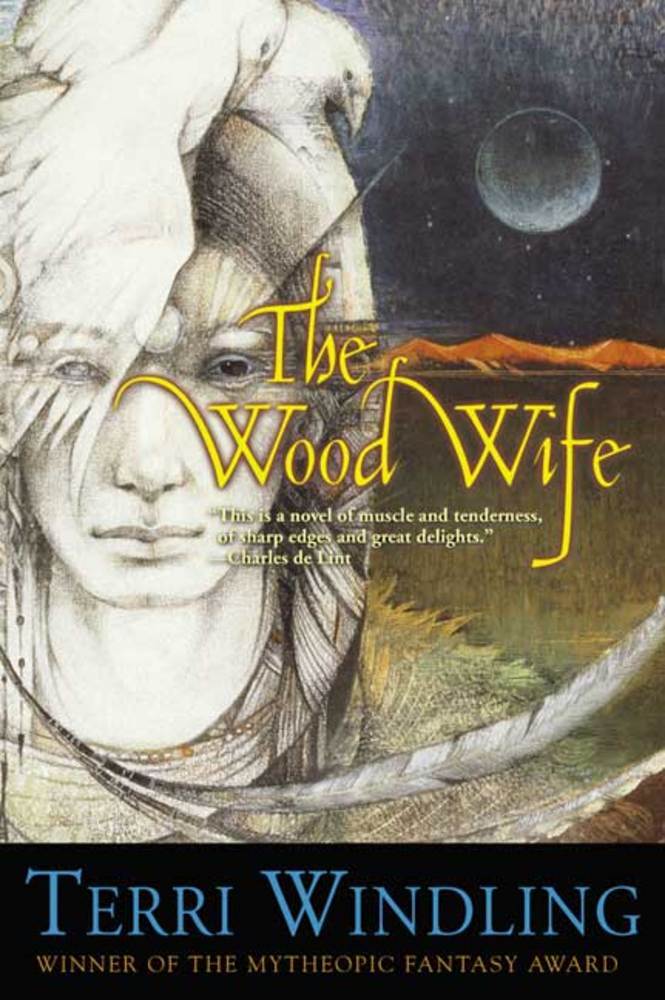 It took me a long time to read this book, however, you shouldn't necessarily see this as a reflection on the quality of the book. I picked up The Wood Wife used, and it was a relatively slim novel, so it was perfect for sticking in my jacket pocket, which means that it only got read a few pages at a time as I rode the PRT or sat in the doctor's office.
Maggie Black has been a poet and a journalist and a wife, but now that she has inherited the home and property of Davis Cooper, a pulitzer prize winning poet with whom she has corresponded for years, she has headed out to the Arizona dessert ostensibly to write a biography of Davis Cooper. What she ends up doing is learning about the land he loved, the mystery of his death, and the loss of his wife.
I liked Maggie. It was lovely to read a fantasy about a competent grown woman who had interesting, but not unreasonable life experiences, and although it sounds really boring when put it that way, she discovers herself and how she relates to her friends and the world. It was nice that nothing really horrific happened to Maggie. Sure she has an ex-husband, but her biggest problem with him is that he is too nice to her--always checking on her and wanting to remain in her life as a friend and recognize all the did for him when he was a struggling musician.
Nigel came down the street toward her, his face shadowed with annoyance. Her heart, that traitorous organ, still leapt when she saw her ex-husband through the window glass. She knew then why she'd run back to Los Angeles, away from nice man up north who said he loved her; Nigel was a hard act to follow. He entered the cafe, his irritation and his energy like a cloud that entered with him, changing the weather of the entire room. And reminding her why she'd once run away from Nigel, too.
I also liked the other characters, especially Johnny Foxxe and Dora. I particularly like the relationship between Dora and her husband. Their relationship and what happens between them isn't something that is often covered in a lot in the books I read, and it gave me a bit to think about.
But mostly I liked the way that she combined North American mythology with European mythology. Are the ethereal beings of North American mythology the same as the ethereal beings of European mythology? It makes an interesting kind of sense.
If you're a fan of Charles de Lint, then I think you'll enjoy Terri Windling's The Wood Wife.
Cover by Susan Seddon Boulet
Publisher: Orb
May 2007 | Rating: 8/10
Borderland: Where Magic Meets Rock and Roll (1986) edited by Terri Windling & Mark Alan Arnold
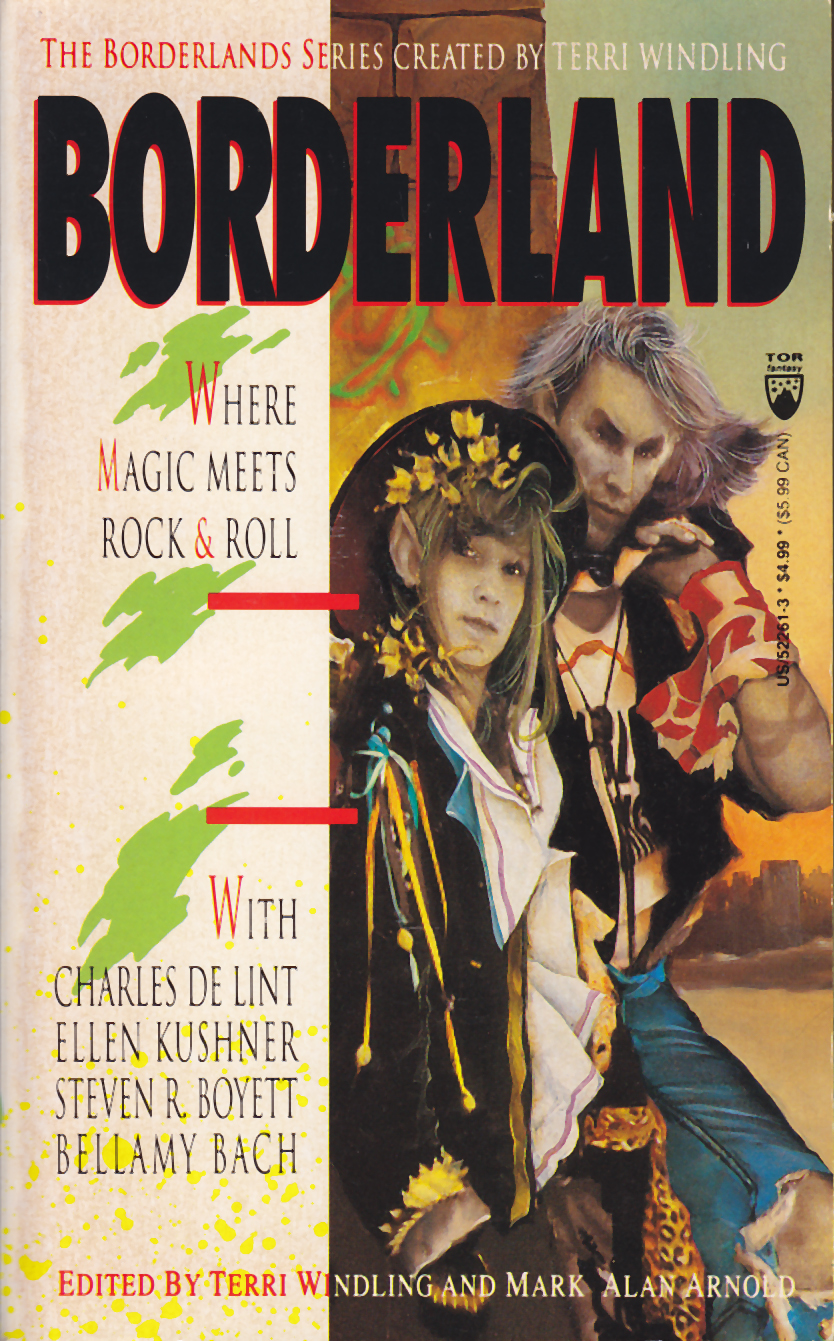 The Borderland anthologies contain stories by some of my favorite authors, in this volume Charles de Lint and Ellen Kushner contributed stories, along with Steven R Boyett and Bellamy Bach.
- Prodigy by Steven R. Boyett
- Gray by Bellamy Bach
- Stick by Charles de Lint
- Charis by Ellen Kushner
I've been a fan of shared world anthologies since Thieves' World, and although Borderlands is nowhere near close to Thieves' World (and some would say that's a good thing) in that there were not the shared characters and story lines that made TW so compelling, there were still four solid stories in this collection. One story was set in the past, soon after the world had been changed by the reappearance of Faerie, the other three stories were set in the present, long after the world had adjusted to the presence of Faerie and Bordertown became whatever it is that it became.
The first story, "Prodigy," was my least favorite. I had a hard time caring about Scooter. I saw why he did the things he did, but that was about it. And the last line of the story annoyed me to no end. I'd have punched him, had that been me.
The second story, "Gray" by Bellamy Bach, I liked better, although the shifting viewpoint confused me initially. And starting with Gray, the remainder of the stories were written from a female point of view. I have no idea if that affected my opinion of the stories, but I did like the remainder better.
I had high expectations for the last two stories, "Stick" by Charles de Lint, and "Charis" by Ellen Kushner, because I am particularly fond of their writing.
"Stick" seemed very familiar to me, so it's possible I read it in another anthology.
"Charis" was a story I know I had not read anywhere previously, and although I enjoyed it very much, it was painfully sad. Ellen Kushner had the teen female mindset down pat, but managed to keep her from being an annoying twit (that's a very hard line to walk, and many writers fail it.). So although it was good, it wasn't the most chipper ending for an anthology.
All in all, I'm glad someone was able to find a copy of this book for me, as it is long out of print, because I love reading new stories by Charles de Lint and Ellen Kushner, but it was somewhat dark, and I can see that it might not be for everyone.
Cover by Thomas Canty
Publisher: Tor Books
October 2008 | Rating: 7/10
The Essential Bordertown (1998) edited by Terri Windling & Delia Sherman
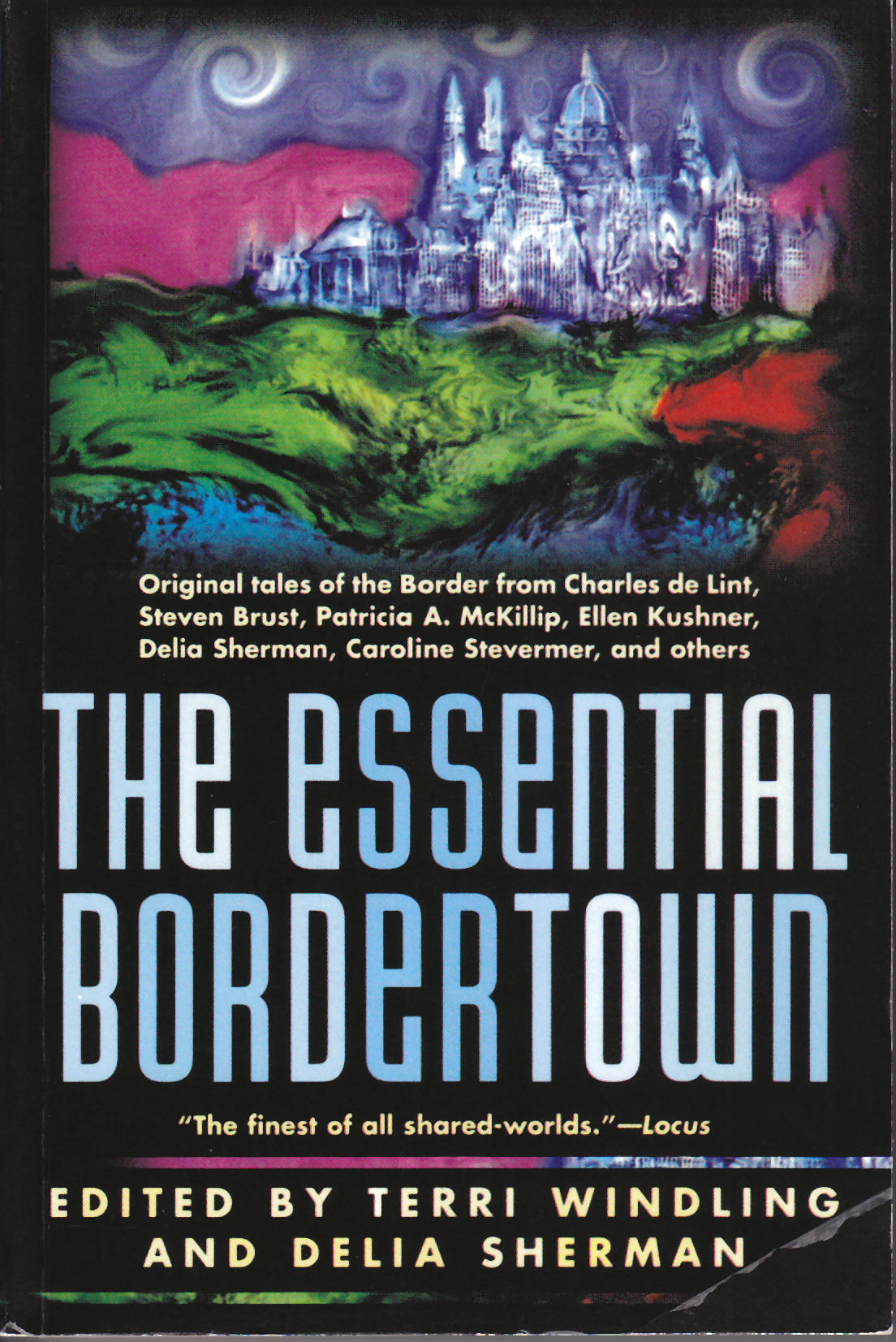 The Essential Bordertown is a collection of short stories set in Bordertown, the land between our world and Faerie. The stories are written with a teenage audiences in mind, with primarily teenage characters, and parts of a "traveler's guide" appearing before each chapter.
Bordertown strikes me as a cross between Sanctuary of Thieves' World and the world created by Charles de Lint. It's the area where faerie and the world of humans meets, and it's a strange place where neither magic or technology works properly, and although there are some places where elves and humans meet and get along, there are roving gangs of elves and humans who rule different parts of town, and woe to the opposite race who wanders into their territory.
- Oak Hill by Patricia A. Mckillip
- Dragon Child by Midori Snyder
- Socks by Delia Sherman
- Half Life by Donnard Sturgis
- Hot Water: A Bordertown Romance by Ellen Kushner
- Arcdia by Michael Korolenko
- Changeling by Elisabeth Kushner
- May This Be Your Last Sorrow by Charles De Lint
- Rag by Caroline Stevermer
- When The Bow Breaks by Steven Brust
- Argentine by Ellen Steiber
- Cover Up My Tracks With Rain by Micole Sudberg
- How Shannaro Tolkinson Lost And Found His Heart by Felicity Savage
Some of my favorite authors contributed to this anthology: Charles de Lint, Steven Brust, Ellen Kushner. I particularly liked Charles de Lint's story "May This Be Your Last Sorrow", but then I think that he has his own magic in that he is able to write the most wonderful short stories.
Although all the stories in this anthology were good, I did like some more than others. As I mentioned, I particularly enjoyed Charles de Lint's "May this Be Your Last Sorrow". I also very much liked Caroline Stevermer's story "Rag", whose characters were adults, but they were adults deal with the friendships of childhood and adolescence. The story "Half Life" by Donnard Sturgis was particularly good–I had no idea where the story was going, and was pleased with how it ended.
And Delia Sherman's story "Socks" was also particularly good, although there was much that was unresolved.
As a whole, the anthology was pretty good. Unlike Thieves World the authors didn't write each others characters, but they did have a shared world, which did tie the stories together, making it something more than a simple anthology.
I would love to read the original Borderland anthologies, however, they're out of print and I'll have to find them used if I want them. But I do recommend The Essential Bordertown to anyone who likes anthologies or any fan of the Charles de Lint.
Cover by Jim Carroll
Publisher: Tor Books
September 2007 | Rating: 8/10Year's Best in Fantasy and Horror
Fairy Tale Anthologies
Snow White, Blood Red (1993) edited by Ellen Datlow & Terri Windling
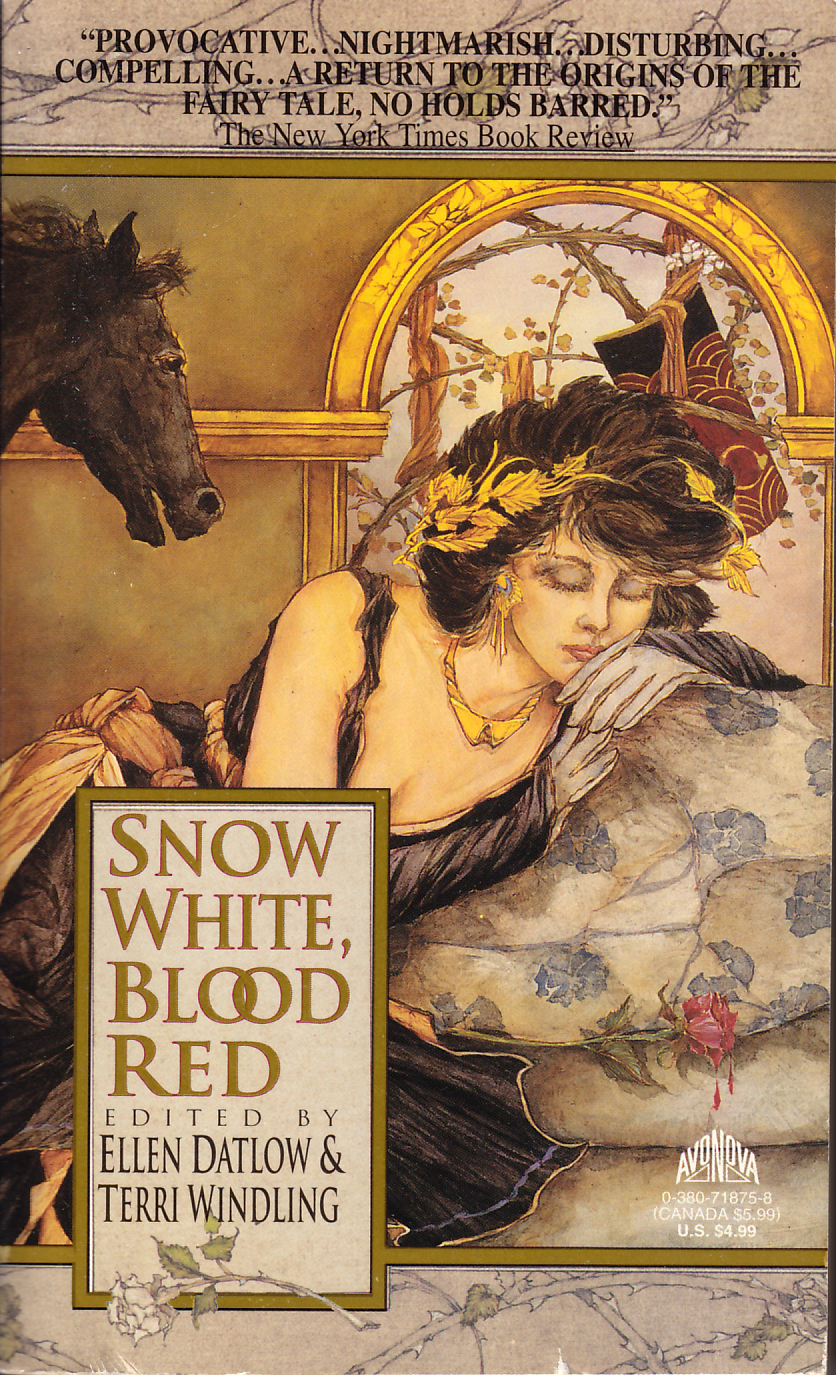 I often have a hard time putting down interesting books. Which means that if I'm reading a book I real like before bed, I end up staying up past my bed time instead of falling asleep. One solution is to read non-fiction before bed. The other solution is to read short story anthologies. Unfortunately, there are not a lot of high quality anthologies out there. At least, not enough to keep up with the rate at which I can read.
So I decided to go back and reread Ellen Datlow and Terri Windling's fantasy anthology Snow White, Blood Red. This book has a whole bunch of things going for it at once: it's edited by Ellen Datlow and Terri Windling; it's got stories by Neil Gaiman and Charles de Lint; and the stories are retellings or reinventions of folk and fairy tales. Mostly fairy tales in this book.
Plus, a gorgeous cover by Thomas Canty.
For those who are unfamiliar with folk tales and fairy tales, many of the original tales--before they got cleaned up and given to kids--were filled with sex, (in addition to the casual violence of people getting eyes poked out or chopping off bits of feet or being shoved into ovens.)
In other words, these are not stories for children.
- Like a Red, Red Rose by Susan Wade
- The Moon is Drowning While I Sleep by Charles de Lint
- The Frog Prince by Gahan Wilson
- Stalking Beans by Nancy Kress
- SnowbyDrop by Tanith Lee
- Little Red by Wendy Wheeler
- I Shall Do Thee Mischief in the Wood by Kathe Koja
- The Root of the Matter by Gregory Frost
- The Princess in the Tower by Elizabeth A. Lynn
- Persimmon by Harvey Jacobs
- Little Poucet by Steve Rasnic Tem
- The Changelings by Melanie Tem
- The Springfield Swans by Caroline Stevermer and Ryan Edmonds
- Troll Bridge by Neil Gaiman
- A Sound, Like Angels Singing by Leonard Rysdyk
- Puss by Esther M. Friesner
- The Glass Casket by Jack Dann
- Knives by Jane Yolen
- The Snow Queen by Patricia A. McKillip
- Breadcrumbs and Stones by Lisa Goldstein
The Charles de Lint story, "The Moon is Drowning While I Sleep," is one of my favorites. It's a Sophie Etiole stories, however, like all of Charles de Lint's short stories, can be read and enjoyed without knowing anything of Newford. Another favorite is Neil Gaiman's "Troll Bridge." I love the idea of paths that take us off to hands hidden just beyond our sight. And I love the way that we are manipulated by the main character and the story.
I also particularly like Patricia A. McKillip's story "The Snow Queen." I reads to me precisely as a version of the tale involving grown-ups instead of children would read. Except of course that I wasn't really sure about how things would end. Some of these stories end as you would expect if you're familiar with the story, and so go off in unexpected directions, so I wasn't sure where this tale was going.
Jack Dann's story, "The Glass Casket," was another story I really enjoyed.
There were a handful of stories I didn't particularly care for, but there weren't that many. And there were different reasons why I didn't like the stories. Lisa Goldstein's "Breadcrumbs and Stones" is excellent, but I found it terribly depressing. Melanie Tem's story, "The Changelings" bothered me so much I couldn't stand to finish it. (I did vaguely remember how it ended.) It was just too awful.
Also, the stories I liked less tended towards horror. This book is a collection of fantasy and horror (as are many Ellen Datlow-Terri Windling anthologies) so I expected that there were going to be at least one or two stories that I don't care for. So it didn't really bother me.
As best I can tell, this anthology is still available, so if you like short stories, this is an anthology you won't want to miss. However, if you like anthologies, this is probably one you already have sitting on your shelves.
Cover by Thomas Canty.
Published by Harper Collins
Rating: 7/10
Black Thorn, White Rose: A Modern Book of Adult Fairytales (1994) edited by Ellen Datlow & Terri Windling
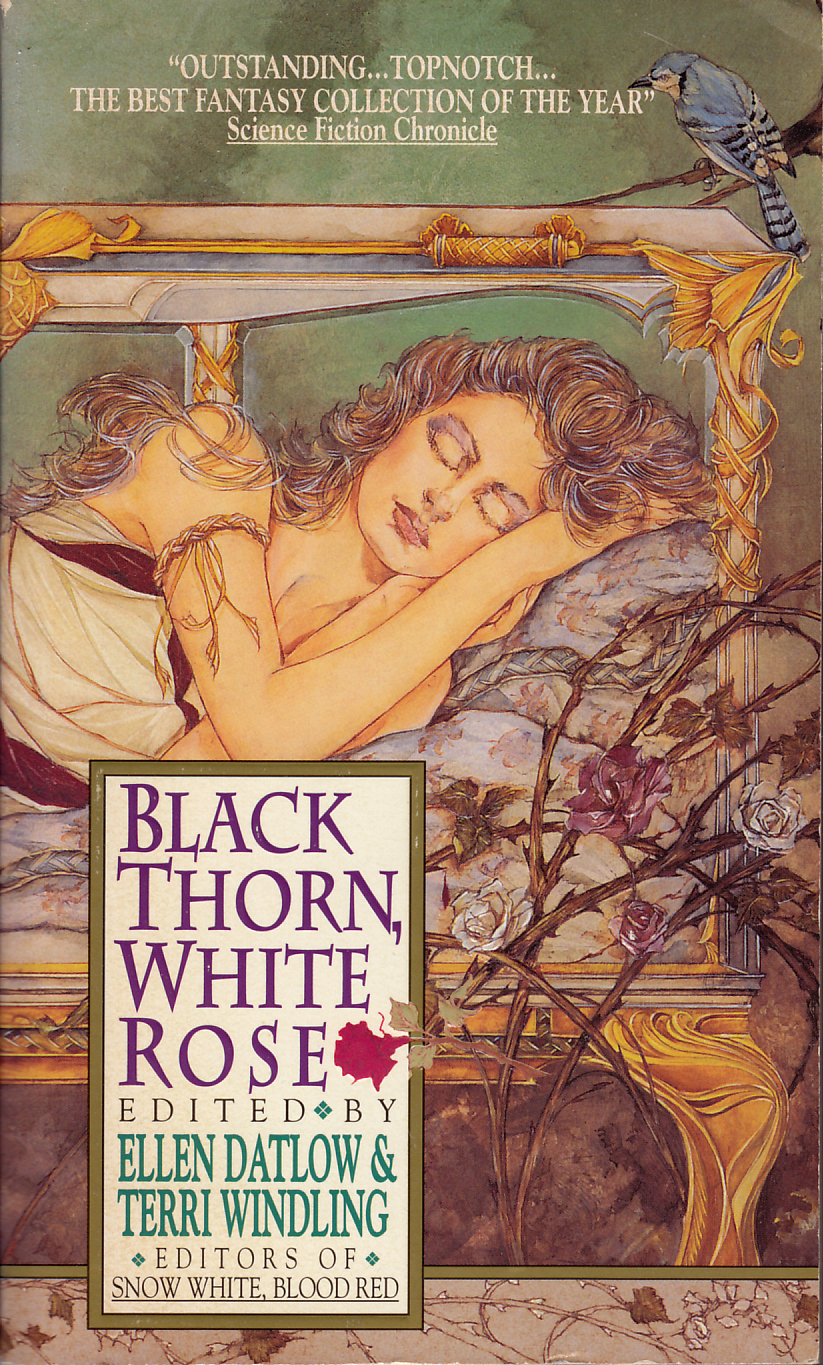 There were several of these collections in the 90s–and I had the first two if I remember correctly.
These are fairy tales retold–some with a change in the point of view, some retold in a modern setting, and some hewing only rather loosely the tales upon which they were based.
- Words Like Pale Stones by Nancy Kress
- Stronger than Time by Patricia C. Wrede
- Somnus's Fair Maid by Ann Elizaneth Downer
- The Frog King, or Iron Henry by Daniel Quinn
- NearbyBeauty by M.E. Beckett
- Ogre by Michael Kandel
- Can't Catch Me by Michael Cadnum
- Journeybread Recipe by Lawrence Schimel
- The Brown Bear of Norway by Isabel Cole
- The Goose Girl by Tim Wynne-Jones
- Tattercoats by Midori Snyder
- Granny Rumple by Jane Yolen
- The Sawing Boys by Howard Waldorp
- Godson by Roger Zelazny
- Ashputtle by Peter Straub
- Silver and Gold by Ellen Steiber
- Sweet Bruising Skin by Storm Constantine
- The Black Swan by Susan Wade
I think my favorite story in the collection may be Roger Zelazny's "Godson" which retells a tale that's not particularly common, but one of my favorites. A boy has Death for his Godfather, and his godfather gives him gifts to use–with some stipulations. I very much like the twists that were put upon this story–especially the bicycle.
Another story I particularly liked was Jane Yolen's "Granny Rumple", though I'm not sure that like or enjoy are the proper terms for a story that's a retelling of Rumplestilskin–told from the point-of-view of the widow of the man who helped the foolish girl.
"The Sawing Boys" by Howard Waldrop was another I particularly liked, primarily for the use of Prohibition Era slang. Well, that and the fact it just plain made me laugh.
So here we are walking down this (pardon the expression) road and we are looking for a phone and a mechanically inclined individual, and we are not having such a hot time of it.
Please note that these are adult fairy tales. They are in the most part true to the original tales, but most adults would find those inappropriate for children.
Cover by Thomas Canty
Published by Wildside Press
Rating: 7/10
Ruby Slippers, Golden Tears (1995) edited by Ellen Datlow & Terri Windling
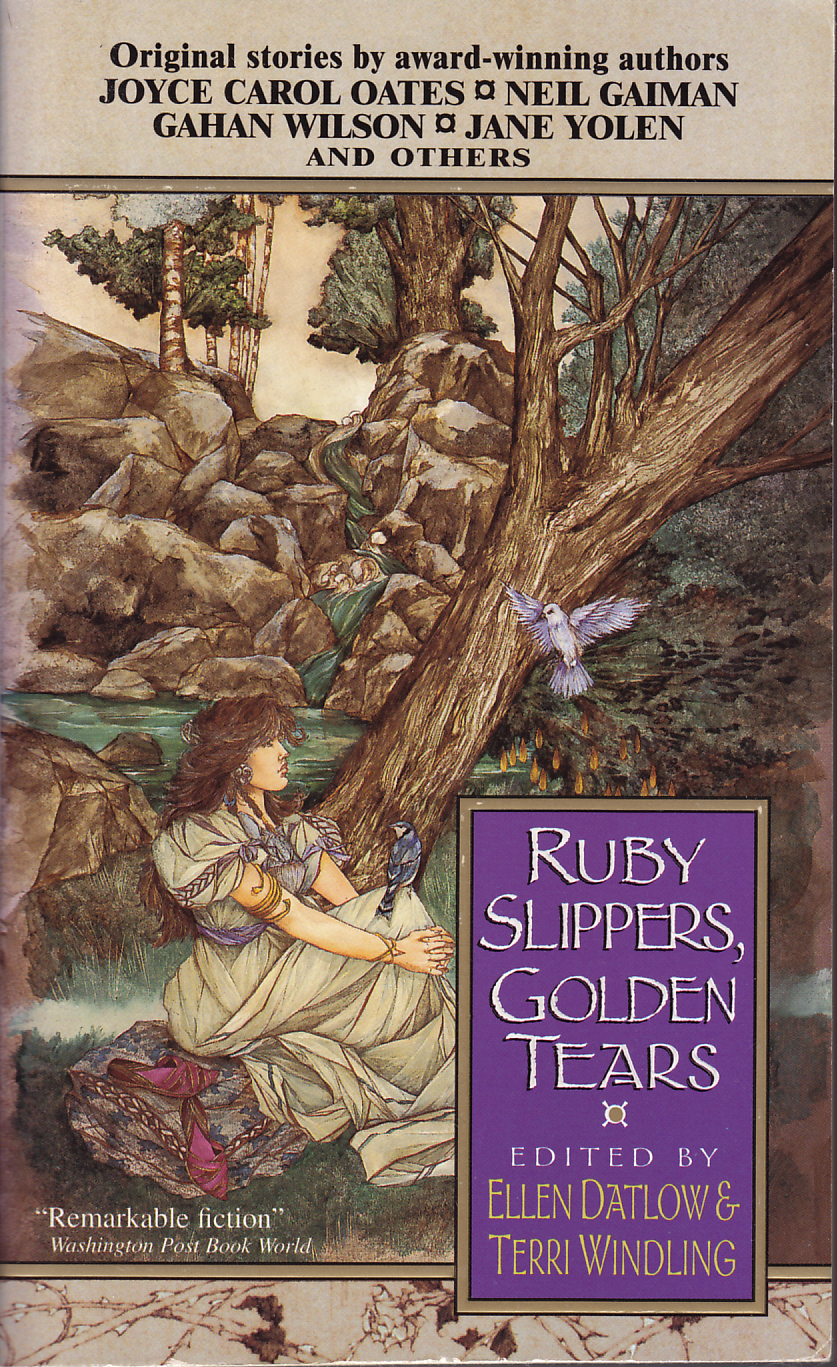
- Ruby Slippers by Susan Wade
- The Beast by Tanith Lee
- Masterpiece by Garry Kilworth
- Summer Wind by Nancy Kress
- This Century of Sleep, or Briar Rose Beneath the Sea by Farida S. T. Shapiro
- The Crossing by Joyce Carol Oates
- Roach in Loafers by Roberta Lannes
- Naked Little Men by Michael Cadnum
- Brother Bear by Lisa Goldstein
- The Emperor Who had Never Seen a Dragon by John Brunner
- Billy Fearless by Nancy A Collins
- The Death of Koshchei the Deathless by Gene Wolfe
- The Real Princess by Susan Palwick
- The Huntsman's Story by Milbre Burch
- After Push Comes to Shove by Milbre Burch
- Hansel and Grettel by Gahan Wilson
- Match Girl by Anne Bishop
- Waking the Prince by Kathe Koja
- The Fox Wife by Ellen Steiber
- The White Road by Neil Gaiman
- The Traveler and the Tale by Jane Yolen
- The Printer's Daughter by Delia Sherman
Cover by Thomas Canty
Published by Harper Collins
Black Swan, White Raven (1997) edited by Ellen Datlow & Terri Windling
 "Introduction" by Terri Windling and Ellen Datlow
- "The Flounder's Kiss" by Michael Cadnum
- "The Black Fairy's Curse" by Karen Joy Fowler
- "Snow in Dirt" by Michael Blumlein
- "Riding the Red" by Nalo Hopkinson
- "No Bigger Than My Thumb" by Esther M. Friesner
- "In the Insomniac Night" by Joyce Carol Oates
- "The Little Match Girl" by Steve Rasnic Tem
- "The Trial of Hansel and Gretel" by Garry Kilworth
- "Rapunzel" by Anne Bishop
- "Sparks" by Gregory Frost
- "The Dog Rose" by Sten Westgard
- "The Reverend's Wife" by Midori Snyder
- "The Orphan the Moth and the Magic" by Harvey Jacobs
- "Three Dwarves and 2000 Maniacs" by Don Webb
- "True Thomas" by Bruce Glassco
- "The True Story" by Pat Murphy
- "Lost and Abandoned" by John Crowley
- "The Breadcrumb Trail" by Nina Kiriki Hoffman
- "On Lickerish Hill" by Susanna Clarke
- "Steadfast" by Nancy Kress
- "Godmother Death" by Jane Yolen
Cover by Thomas Canty
Published by Avon
Silver Birch, Blood Moon (1999) edited by by Ellen Datlow & Terri Windling
 "Introduction" by Terri Windling and Ellen Datlow
- "Kiss Kiss" by Tanith Lee
- "Carabosse" by Delia Sherman
- "The Price" by Patricia Briggs
- "Glass Coffin" by Caitlín R. Kiernan
- "The Vanishing Virgin" by Harvey Jacobs
- "Clad in Gossamer" by Nancy Kress
- "Precious" by Nalo Hopkinson
- "The Sea Hag" by Melissa Lee Shaw
- "The Frog Chauffeur" by Garry Kilworth
- "The Dybbuk in the Bottle" by Russell William Asplund
- "The Shell Box" by Karawynn Long
- "Ivory Bones" by Susan Wade
- "The Wild Heart" by Anne Bishop
- "You Wandered Off Like a Foolish Child to Break Your Heart and Mine" by Pat York
- "Arabian Phoenix" by India Edghill
- "Toad-Rich" by Michael Cadnum
- "Skin So Green and Fine" by Wendy Wheeler
- "The Willful Child, the Black Dog, and the Beanstalk" by Melanie Tem
- "Locks" by Neil Gaiman
- "Marsh-Magic" by Robin McKinley
- "Toad" by Patricia A. McKillip
Cover by Thomas Canty
Publisher: Avon Books
Black Heart, Ivory Bones (2000) edited by Ellen Datlow & Terri Windling
 Introduction by Terri Windling and Ellen Datlow
- "Rapunzel" by Tanith Lee
- "The Crone" by Delia Sherman
- "Big Hair" by Esther Friesner
- "The King with Three Daughters" by Russell Blackford
- "Boys and Girls Together" by Neil Gaiman
- "And Still She Sleeps" by Greg Costikyan
- "Snow in Summer" by Jane Yolen
- "Briar Rose and Witch" by Debra Cash
- "Chanterelle" by Brian Stableford
- "Bear It Away" by Michael Cadnum
- "Goldilocks Tells All" by Scott Bradfield
- "My Life as a Bird" by Charles de Lint
- "The Red Boots" by Leah Cutter
- "Rosie's Dance" by Emma Hardesty
- "You, Little Match-girl" by Joyce Carol Oates
- "Dreaming among Men" by Bryn Kanar
- "The Cats of San Martino" by Ellen Steiber
- "The Golem" by Severna Park
- "Our Mortal Span" by Howard Waldrop
- "Mr. Simonelli or the Fairy Widower" by Susanna Clarke
Cover by Thomas Canty
Publisher: Eos
Fairy Tales Retold
A Wolf at the Door (2000) edited by Ellen Datlow & Terri Windling
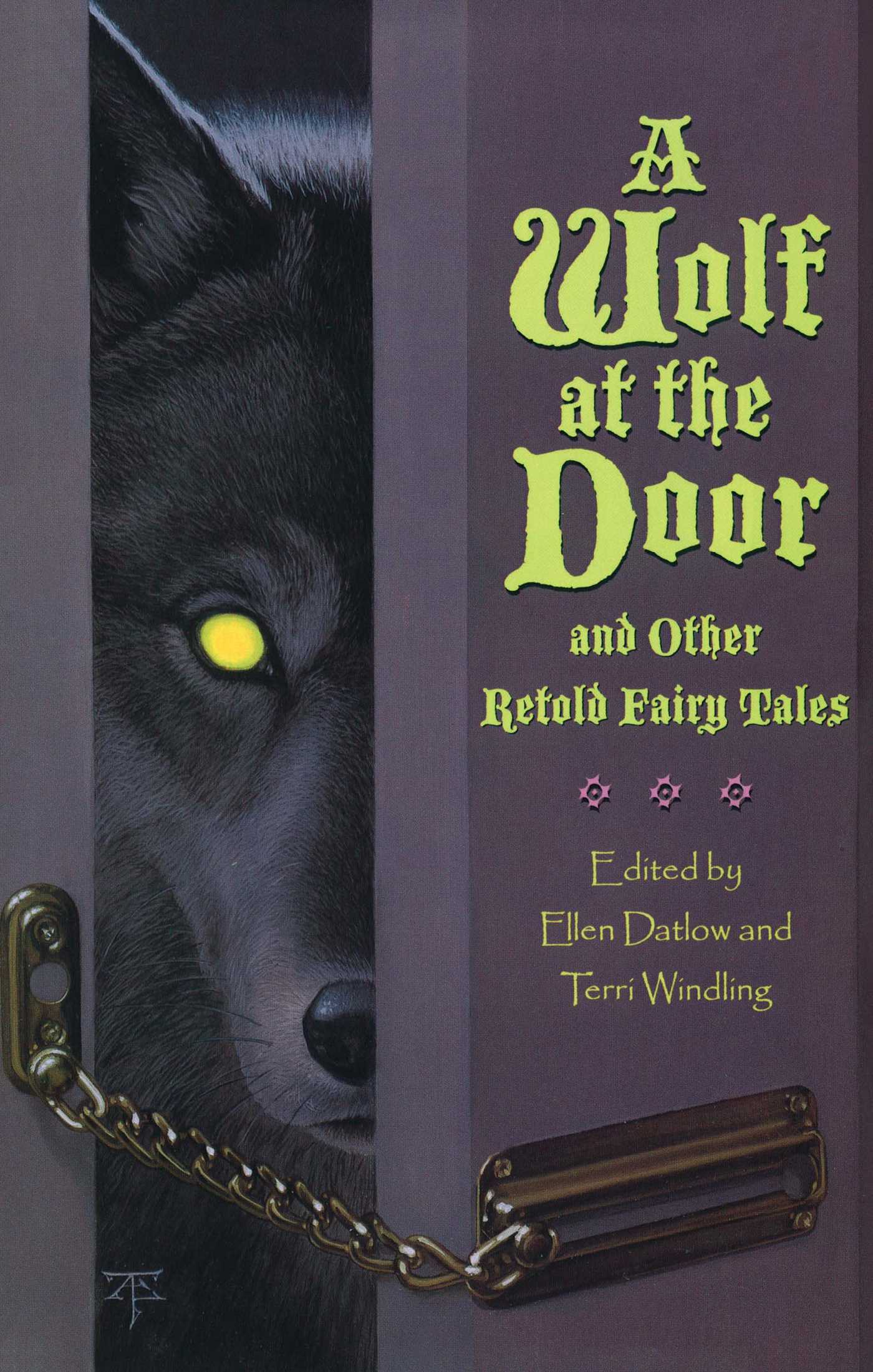 I love folk tales and fairy tales, and I love the idea of stories that have been told and retold, and then finally captured on paper. The problem of course, is finding an author who is good at translating stories from an oral tradition into something that works well written.
There's something wonderful about a well-told short story, and I think that the best short stories in the world are folk and fairy tales.
Ellen Datlow and Terri Windling are very good at finding authors who can take these stories and retell them, and they always put together wonderful anthologies. They brought together thirteen writers for this collection of retold fairy tales.
- The Months of Manhattan by Delia Sherman
- Cinder Elephant by Jane Yolen
- Instructions by Neil Gaiman
- Mrs Big: "Jack and the Beanstalk" Retold by Michael Cadnum
- Falada: The Goose Girls Horse by Nancy Farmer
- A Wolf at the Door by Tanith Lee
- Ali Baba and the Forty Aliens by Janeen Webb
- Swans by Kelly Link
- The Kingdom of Melting Glances by Katherine Vaz
- Hansel's Eyes by Garth Nix
- Becoming Charise by Kathe Koja
- The Seven Stage a Comeback by Gergory Maguire
- The Twelve Dancing Princesses by Patricia A. McKillip
Although one or two of the stories I found to be just okay, others were nothing short of excellent. It also seems as if the stories were I liked the best were towards the end of the book. For me the collection started out okay, and then got better and better the more I read.
Delia Sherman's story, The Months of Manhattan is a retelling of one of my favorite folk tales, and although the moral remains the same--always try to have something nice to say--I was somewhat disappointed by the change in the ending. I thought that Janeen Webb's Ali Baba and the Forty Aliens did a better job modifying a familiar story without making it a bit too neat and pat. And considering some of the other stories in this collection, I'm not quite certain why the The Months of Manhattan ended the way it did.
I was quite pleased by Katherine Vaz's The Kingdom of the Melting Glances, as it was based upon stories that had not heard before. The stories are, I believe, of Hispanic tradition, and most of my folktale collections are European or Asian, so I will definitely need to search for some new collections to read.
Although I don't have much of a ear for poetry, I enjoyed Neil Gaiman's poem Instructions, which was a compilation of the secrets from different stories. A Wolf at the Door, the story from which the title of the anthology was taken, was very good--especially the twist.
And I really liked Garth Nix's Hansel's Eyes. It was one of the tales that kept closely to what I like best about folk and fairy tales--the fact that things aren't always neat and nice.
Not that I think the purpose of these stories is necessarily to scare us, as much as it is to make us pay attention to what is happening around us.
Cover by Tristan Elwell
Publisher: Aladdin
Rating: 7/10
Swan Sister (2003) edited by Ellen Datlow & Terri Windling
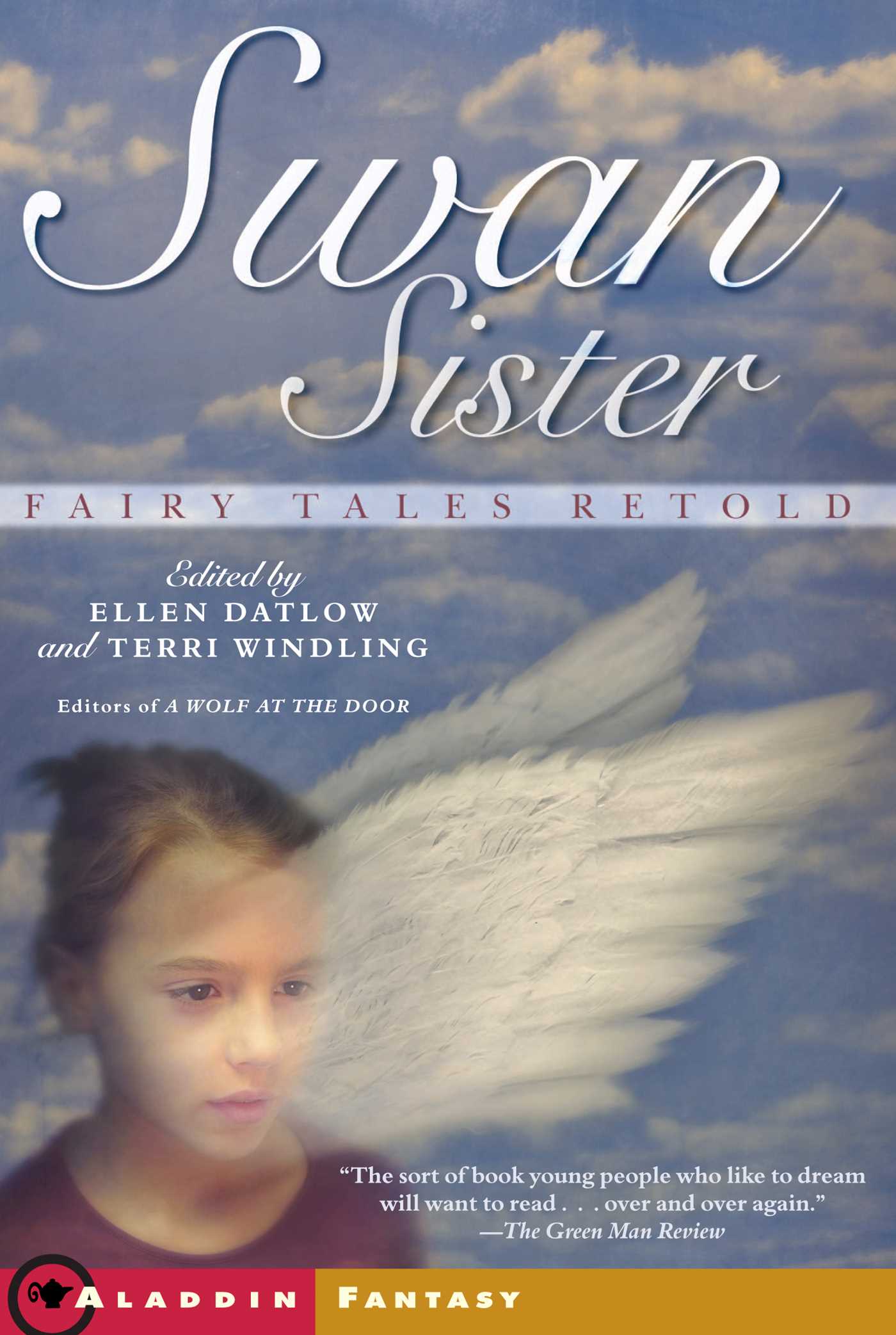 I don't think I've come across a short story collection put together by Ellen Datlow and Terri Windling that I didn't like, and Swan Sister is no exception to the rule.
The stories are fairy tales retold, by a variety of authors--many some of my favorites.
- Greenkid by Jane Yolen
- Golden Fur by Midori Snyder
- Chambers of the Heart by Nina Kiriki Hoffman
- Little Red and the Big Bad by Will Shetterly
- The Fish's Story by Pat York
- The Children of Tilford Fortune by Christopher Rowe
- The Girl in the Attic by Lois Metzger
- The Harm that Sang by Gregory Frost
- A Life in Miniature by Bruce Coville
- Lupe by Kathe Koja
- Awake by Tanith Lee
- Inventing Aladdin by Neil Gaiman
- My Swan Sister by Katherine Vaz
The collection opens with Jane Yolen's story "Greenkid." I cannot at all think of a specific story from which this tale strung, yet it contains multiple elements of folk and fairy tales, especially the idea of never sharing your name with a faerie, for names give such creatures power over you.
Nina Kiriki Hoffman once again reminds me why I love her writing so much as she retells the story of Bluebeard in "Chambers of the Heart" from the point of view of the young bride. I love how she manages to tell an entire tale in only a short story. "Chambers of the Heart" was probably the story that kept closest to the original tale, of a man who murders his brides and keeps their bodies in the basement. Yet knowing the tale made the story no less compelling.
In other other direction, Wil Shetterly's "Little Red and the Big Bad" was as far from a traditional folk tale as you can get, yet he managed to completely recreate the feel and idea of the original tale--especially in the ending.
"The Girl in the Attic" by Lois Metzger kept the feel of a fairy tale, with its step-mother / step-daughter relationship, however, I loved the way the story turned out.
I know why Katherine Vaz's story "My Swan Sister" was last--because by the end my eyes were too blurry with tears to continue on. Very impressive for a story only twelve pages long. Although this story deviated the most from the traditional fairy tale, it was still excellent. And I particularly like how the story made me see and feel the idea of experiencing each day to its fullest.
All in all, there wasn't a weak story in this collection.
Like A Wolf at the Door, this is a collection for children and young adults. However, the stories are so well written that adults should find them just as appealing. If you like folk and fairy tales, I highly recommend this collection.
Cover by Kamil Vojnar
Publisher: Aladdin
Rating: 9/10
Troll's Eye View: A Book of Villainous Tales (2009) edited by Ellen Datlow & Terri Windling
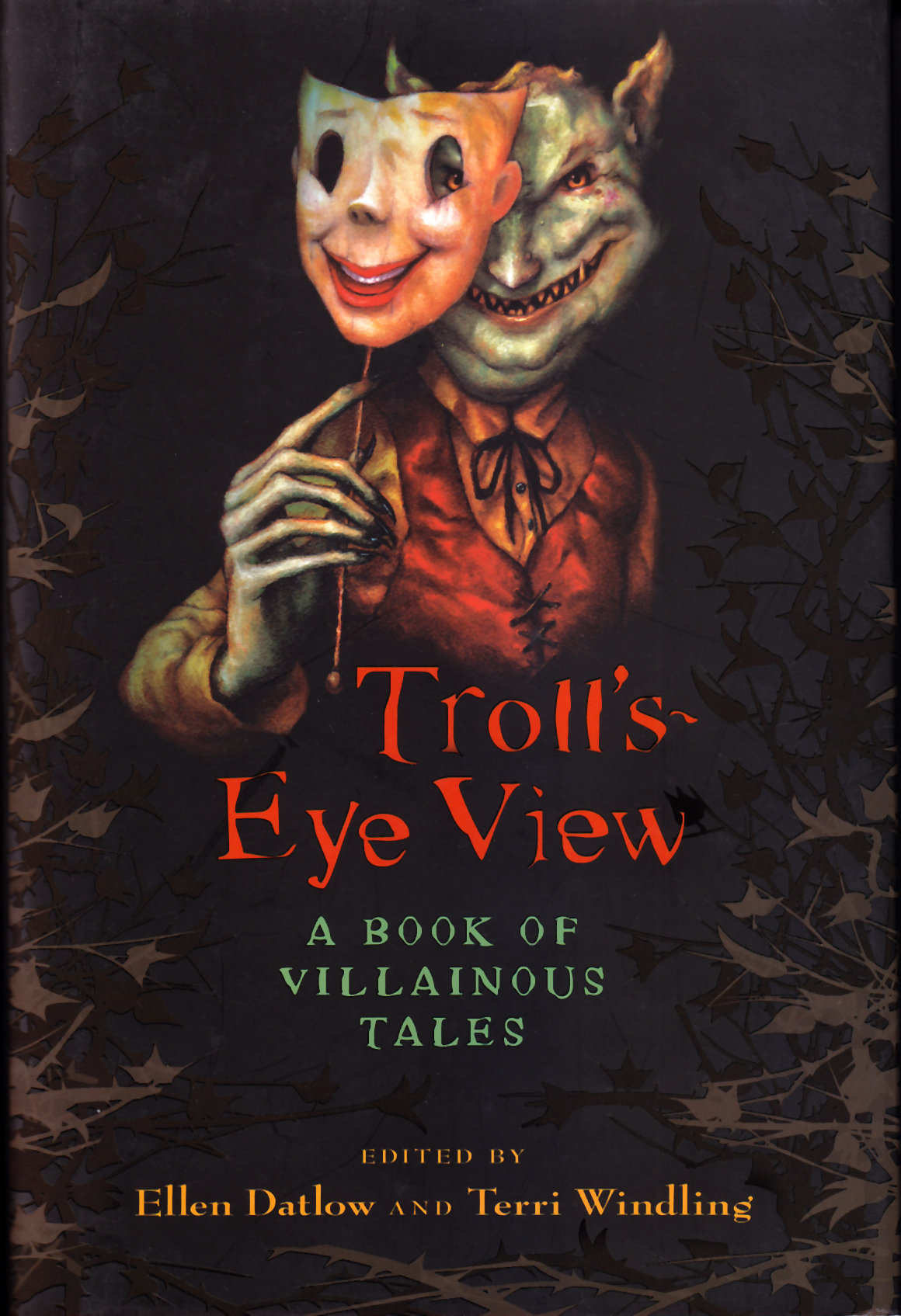
- "Wizard's Apprentice" by Delia Sherman
- "An Unwelcome Guest" by Garth Nix
- "Faery Tales" by Wendy Froud
- "Rags and Riches" by Nina Kiriki Hoffman
- "Up the Down Beanstalk: A Wife Remembers" by Peter S. Beagle
- "The Shoes That Were Danced to Pieces" by Ellen Kushner
- "Puss in Boots, the Sequel" by Joseph Stanton
- "The Boy Who Cried Wolf" by Holly Black
- "Troll" by Jane Yolen
- "Castle Othello" by Nancy Farmer
- "‘Skin" by Michael Cadnum
- "A Delicate Architecture" by Catherynne M. Valente
- "Molly" by Midori Snyder
- "Observing the Formalities" by Neil Gaiman
- "The Cinderella Game" by Kelly Link
Cover by Esao Andrews
Published by Viking Books for Young Readers
Mythic Fiction
The Green Man: Tales from the Mythic Forest (2002) edited by Ellen Datlow & Terri Windling
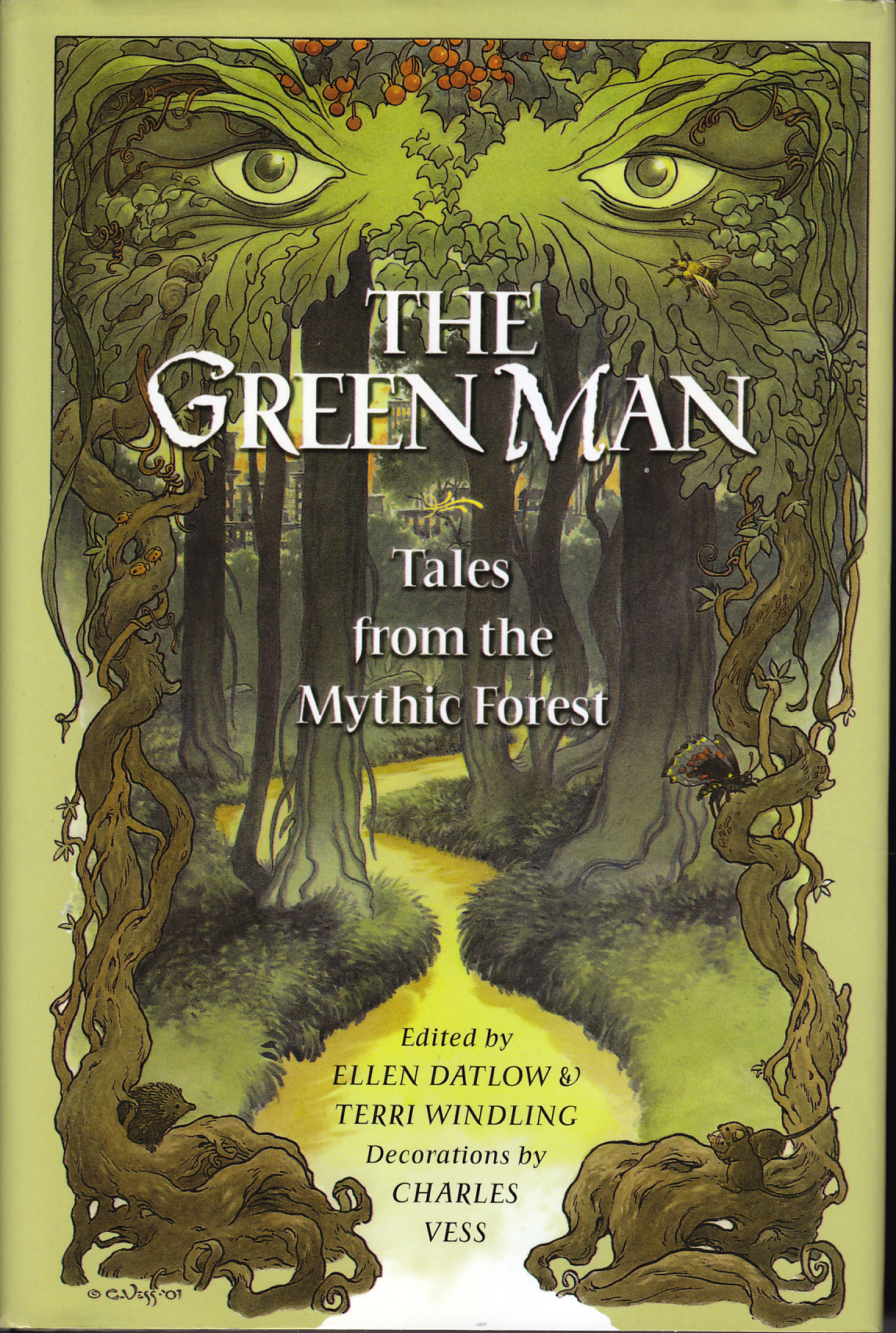
- Going Wodwo (poem) by Neil Gaiman
- Grand Central Park by Delia Sherman
- Daphne by Michael Cadnum
- Somewhere in My Mind There is a Painting Box by Charles de Lint
- Among the Leaves So Green by Tanith Lee
- Song of the Cailleach Bheur (poem) by Jane Yolen
- Hunter's Moon by Patricia A. McKillip
- Charlie's Away by Midori Snyder
- A World Painted by Birds by Katherine Vaz
- Grounded by Nina Kiriki Hoffman
- Overlooking by Carol Emshwiller
- Fie, Fi, Fo, Fum by Gregory Maguire
- Joshua Tree by Emma Bull
- Ali anugne o chash (the boy who was) by Carolyn Dunn
- Remnants by Kathe Koja
- The Pagodas of Ciboure by M. Shayne Bell
- The Green Man (poem) by Bill Lewis
- The Green Word by Jeffrey Ford
Cover by Charles Vess
Published by Viking
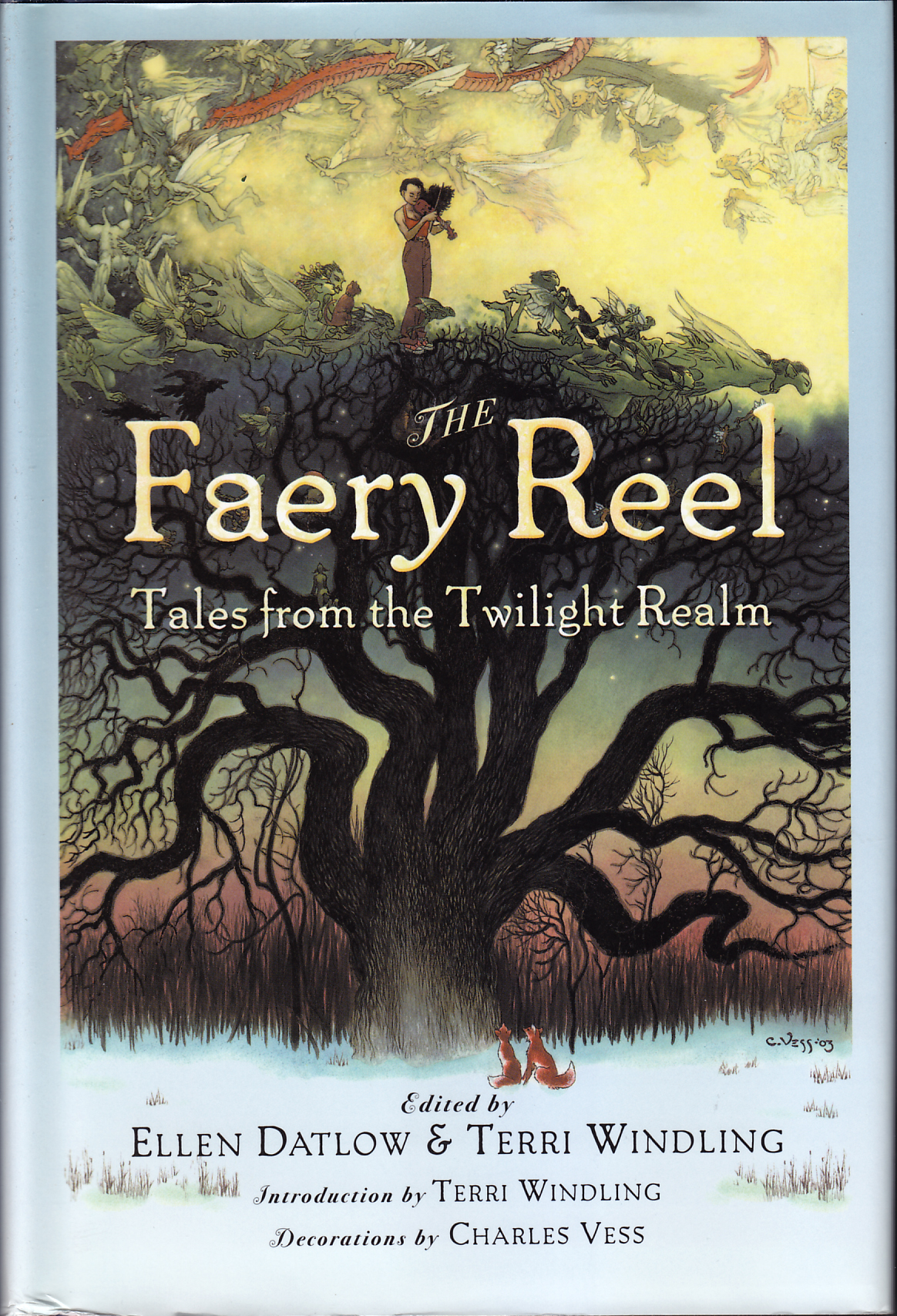 Any time I see a fantasy anthology edited by Ellen Datlow and Terri Windling, I'll often as not pick it up, because I know that it's going to be good. Usually very good. This volume however, has the added bonus of poems by both Charles de Lint and Neil Gaiman.
Needless to say I snatched it up--even thought it was in hardback--when I came across it.
These faery tales are based not upon the fairies of Disney but upon the faery of folktales. As they say in the introduction:
In this book about our good neighbors, we've asked a number of our favorite writers to travel into the Twilight Realm (an ancient name for the land of Faerie) and to bring back stories of faeries and the hapless mortals who cross their path. "No butterfly-winged sprites," we pleaded. "Read the old folktales, journey farther afield, find some of the less explored paths through the Realm.
It would be hard for me not to love this book.
- The Boys of Goose Hill by Charles de Lint
- Catnyp by Delia Sherman
- Elvenbrood by Tanith Lee
- Your Garnet Eyes by Katherine Vaz
- Tengu Mountain by Gregory Frost
- The Faery Handbag by Kelly Link
- The Price of Glamour by Steve Berman
- The Night Market by Holly Black
- Never Never by Bruce Glassco
- Screaming for Aferies by Ellen Steiber
- Immersed in Matter by Nina Kiriki Hoffman
- Undine by Patricia A. McKillip
- The Oakthing by Gregory Maguire
- Foxwife by Hiromi Goto
- The Dream Eaters by A. W. Dellamonico
- The Faery Reel by Neil Gaiman
- The Shooter at the Heartrock Waterhole by Bill Congreve
- The Annals of Eelin-OK by Jeffrey Ford
- De La Tierra by Emma Bull
- How to Find Faery by Nan Fry
And I wasn't let down. Tengu Mountain by Gregory Frost was perfect. It reminded me of any number of Japanese folktales without actually being any one of them.
Catnyp by Delia Sherman I quite liked; it reminded me a bit of a Charles de Lint story. In Catnyp, Faerie exists parallel to our world, and includes a New York Public Library that reminds me a bit of Terry Pratchett's library, only without the L-Space.
The Price of Glamour by Steve Berman was the type of tale I like best--not set in this time, and not really set in this reality. I don't have anything against fantasy set in our time and our reality (I do love Charles de Lint after all!) It's just that for me tales set in other realities are more of an escape. And often I really want to escape from this reality.
Bruce Glassco's Never Never is fantastic. I'd never thought about how Hook felt about the part he had to play in Never Never land before, and why he was so bitter about it.
One of my favorite stories was The Dream Eaters by A.M. Dellamonica. Part faerie tale, part hard boiled detective tale, it combines my favorite types of stories. I was, however, a little confused by her faerie and how time ran there.
All in all an excellent anthology. But I hardly expected anything less.
Cover by Charles Vess
Published by Viking
Rating: 8/10
The Coyote Road: Trickster Tales (2007) edited by Ellen Datlow & Terri Windling
 I love short stories. Aside from collections by Charles de Lint, I best love anthologies by Ellen Datlow & Terri Windling best. Their books are like comfort food, and I save them up for when I'm sick or feeling low.
In the same vein as The Green Man and The Faerie Reel, Datlow and Windling have this time collected stories about tricksters, and they've got some of my favorite authors in this collection: Charles de Lint, Nina Kiriki Hoffman, Ellen Kushner. As usual, they manage to collect stories by some of my favorite story tellers.
- One Odd Shoe by Pat Murphy
- Coyote Woman by Carolyn Dunn
- Wagers of Gold Mountain by Steve Berman
- The Listeners by Nina Kiriki Hoffman
- Realer than You by Christopher Barzak
- The Fiddler of Bayou Teche by Delia Sherman
- A Tale for the Short Days by Richard Bowes
- Friday Night at St. Cecilia's by Ellen Klages
- The Fortune Teller by Patricia A. McKillip
- How Raven Made his Bride by Theodora Goss
- Crow Roads by Charles de Lint
- The Chamber of Music Animals by Katharine Vaz
- Uncle Bob's Visits by Caroline Stevermer
- Uncle Tompa by Midori Snyder
- Cat of the World by Michael Cadnum
- Honored Guest by Ellen Kushner
- Always the Same Story by Elizabeth E. Wein
- The Senorita and the Cactus Thorn by Kim Antieau
- Black Rock Blues by Will Shetterly
- The Constable of Abal by Holly Black
- God Clown by Carol Emshwiller
- The Other Labyrinnth by Jedediah Berry
- The Dreaming Wind by Jeffery Ford
- Kwaku Anansi Walks the World's Web by Jane Yolen
- The Evolution of Trickster Stories Amount the Dogs of North Park after the Change by Kij Johnson
For those who are Charles de Lint fans, "Crow Roads" is not a Newford tale, but an excellent story nevertheless, of a girl dreaming to escape her small, restrictive life. There is little more I can cay, other than as expected, this was an excellent story.
As with many of her stories, Nina Kiriki Hoffman's "The Listeners" is a dark at times, but it's the dark of the truths from which we all try to hide, rather than from imaginary monsters. And of course being a trickster tale, all's well that ends well.
I didn't recognize "Honored Guest" as an Ellen Kushner story initially, until the dialog started to feel familiar and the name Campion came up. Then I belatedly realized that was the Ellen Kushner story. In a way, almost wish I hadn't recognized the name, because part of me felt the story was stronger for not being tied to that world.
But only a very small part of me.
Besides those there, all the stories in this collection were good, and most were excellent. I especially enjoyed "The Fiddler of Bayou Teche" by Delia Sherman, which is somewhat of a deal with the devil story, except it's not really the devil, though for all he does, he may as well be acting in the devil's stead.
Another deal with the Devil story was Holly Black's "A Reversal of Fortune." Despite the gross out bits (considering eating candy all day is enough to make me feel ill), was an excellent story.
Some other favorites were Richard Bowes' "A Tale for Short Days" where a trickster comes back again and again to revisit one family. "Black Rock Blues" by Will Shetterly was one story where the trickster was the main character who did the outwitting rather than being outwitted, as was Elizabeth E. Wein's "Always the Same Story."
Another favorite was "The Constable of Abal" by Kelly Link. The story ranged near and far and I was never quite sure where it was going, but that was ok because I was glad to be along for the ride.
If like short story collections, or trickster tales, then you will want to read The Coyote Road. It has stories from many of my favorite writers, and as with all their collections, I was delighted to discover new authors for whom I'll be on the lookout.
Cover by Charles Vess
Published by Viking
Rating: 9/10
The Beastly Bride: Tales of the Animal People (2010) edited by Ellen Datlow & Terri Windling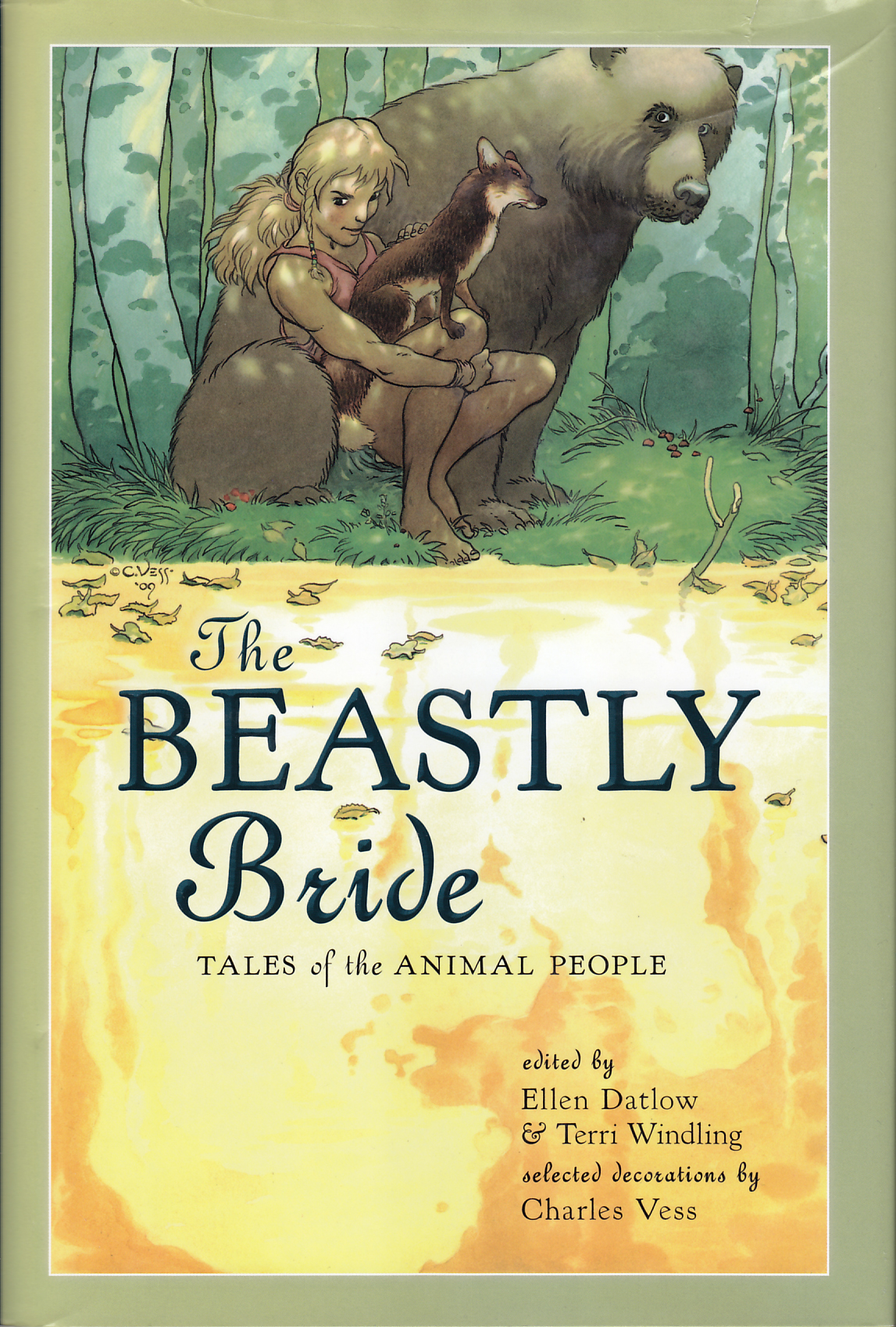
- "Island Lake" by E. Catherine Tobler
- "The Puma's Daughter" by Tanith Lee
- "Map of Seventeen" by Christopher Barzak
- "The Selkie Speaks" by Delia Sherman
- "Bear's Bride" by Johanna Sinisalo
- "The Abominable Child's Tale" by Carol Emshwiller
- "The Hikikomori" by Hiromi Goto
- "The Comeuppance of Creegus Maxin" by Gregory Frost
- "Ganesha" by Jeffrey Ford
- "The Elephant's Bride" by Jane Yolen
- "The Children of Cadmus" by Ellen Kushner
- "The White Doe Mourns Her Childhood" by Jeanine Hall Gailey
- "The White Doe's Love Song" by Jeanine Hall Gailey
- "The White Doe Decides" by Jeanine Hall Gailey
- "Coyote and Valorosa" by Terra L. Gearheart
- "One Thin Dime" by Stewart Moore
- "The Monkey Bride" by Midori Snyder
- "Pishaach" by Shweta Narayan
- "The Salamander Fire" by Marly Youmans
- "The Margay's Children" by Richard Bowes
- "Thumbleriggery and Fledglings" by Steve Berman
- "The Flock" by Lucius Shepard
- "The Children of the Shark God" by Peter Beagle
- "Rosina" by Nan Fry
Cover by Charles Vess
Viking Books for Young Readers
Teeth: Vampire Tales (2011) edited by Ellen Datlow & Terri Windling
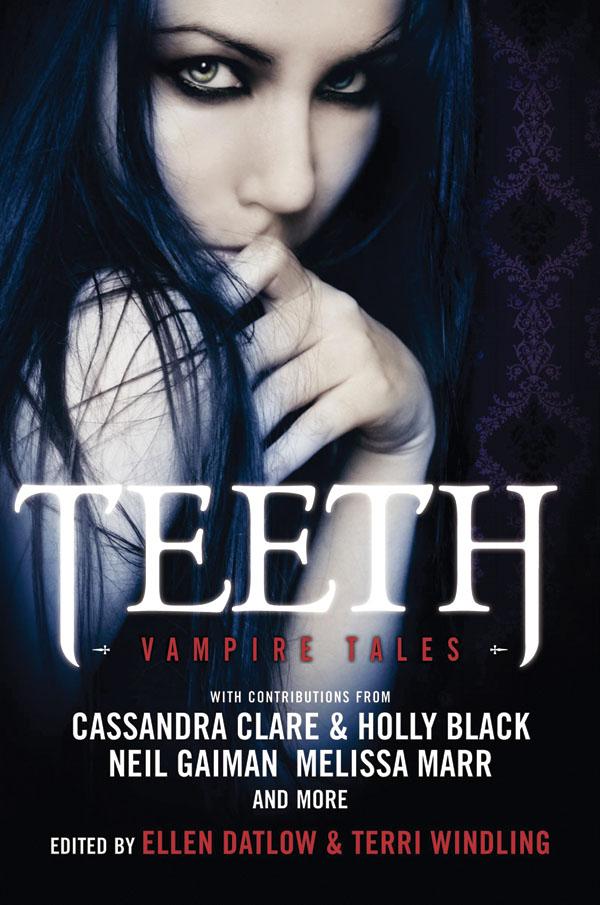 This is an Ellen Datlow and Terri Windling anthology, so as always, there are fascinating bits of folklore.
Rice, not garlic, was the most effective means of keeping Chinese vampires at bay, for they had a strange compulsion to count. Throwing rice at the ghost compelled it to stop; it would not move again until each grain was counted.
- "Things to Know About Being Dead" by Genevieve Valentine
- "All Smiles" by Steve Berman
- "Gap Year" by Christopher Barzak
- "Bloody Sunrise" by Neil Gaiman
- "Flying" by Delia Sherman
- "Vampire Weather" by Garth Nix
- "Late Bloomer" by Suzy McKee Charnas
- "The List of Definite Endings" by Kaaron Warren
- "Best Friends Forever" by Cecil Castellucci
- "Sit the Dead" by Jeffrey Ford
- "Sunbleached" by Nathan Ballingrud
- "Baby" by Kathe Koja
- "In the Future When All's Well" by Catherynne M. Valente
- "Transition" by Melissa Marr
- "History" by Ellen Kushner
- "The Perfect Dinner Party" by Cassandra Clare & Holly Black
- "Slice of Life" by Lucius Shepard
- "My Generation" by Emma Bull
- "Why Light?" by Tanith Lee
"Things to Know About Being Dead" by Genevieve Valentine is the story of a young, just turned, Jiang-shi (vampire) and her grandmother, who is the only one who knows what's happening. This story was sweet and sad and wonderful, and one of my favorites.
"All Smiles" by Steve Berman tells of a young boy running away from reform school who learns the hard way that vampires exist.
"Gap Year" by Christopher Barzak is Loretta's story, and how sometimes childhood friends aren't the friends you think they are.
"Bloody Sunrise" by Neil Gaiman is a poem, and I'm a heathen and just don't get poetry. (Apologies to all my friends who are poets.)
"Flying" by Delia Sherman was another favorite story. A young trapeze artist and her parents have to stop touring when she develops Leukemia, but Lenka misses the circus and wants more than anything to return.
"Vampire Weather" by Garth Nix was a story I had not read before. Vampirism has become an epidemic, but Amos belongs to a secluded religious community that stubbornly clings to the "old ways". For some reason, when I first read this, I thought it ended differently than it actually did.
"Late Bloomer" by Suzy McKee Charnas follows Josh, who just can't seem to find his place and what he is supposed to do with his life. Perhaps, being a vampire isn't all it's cracked up to be.
It had a lovely line that made me think:
Odette snarled silently, showing a gleam of fang (Josh looked away; he hated thinking about where those teeth had been).
"The List of Definite Endings" by Kaaron Warren is Claudia's story, and how she tries to find a different path. This was another story I especially enjoyed.
"Best Friends Forever" by Cecil Castellucci was another sad story, of illness and dying. But it also tells of friendship, and how friends can save and change each other.
"Sit the Dead" by Jeffrey Ford was an… odd story. Luke wants to be with Darlene, but there are certain things her family does that he has to do when someone dies, and Darlene asks Luke to sit with the dead with her Uncle Sfortunado.
"Sunbleached" by Nathan Ballingrud was definitely horror, and as such, one of the stories I didn't like. Joshua has trapped a vampire under their house, and wants it to turn him.
"Baby" by Kathe Koja is another story in the horror genre. Another not for me.
"In the Future When All's Well" by Catherynne M. Valente tells of a future time when suddenly, for reasons no one can figure out, people are turning into vampires. Especially teenagers.
"Transition" by Melissa Marr is another look at the downsides of being a vampire–the possessiveness and the inability to kill the vampire who turned you being two big downsides.
"History" by Ellen Kushner is the story of a history student in love with a vampire, and her frustration with his inability to remember events she desperately wants to know more about.
As always, she writes lines that I love:
He did have a cold once, for a couple of hours. He said he picked it up on the street. And that people should be forced to wear tags on their collars saying, DON'T BITE ME I'M DISEASED.
So in theory, people with allergies could keep themselves from being bitten by vampires, by pretending to have colds. That amuses me to no end.
"The Perfect Dinner Party" by Cassandra Clare & Holly Black is disturbing and creepy and again looks at the downsides of never growing older. Especially if you're a child when you were turned. This story was disturbing, but I quite liked it.
"Slice of Life" by Lucius Shepard was another story that disturbed me. What would you be willing to do for you friend, and how can you be sure your friends love you for who you are, not just what you can do for them.
"My Generation" by Emma Bull is another poem.
"Why Light?" by Tanith Lee is the final story, and one I particularly liked. These vampires are born and not made, but different traits have different strengths.
As expected, this was a very good anthology, and although I didn't like the horror or the poetry, that's a failing of mine, not the anthology.
Cover by Valentina Kallias
Published by Harper Collins
Rating: 8/10
Queen Victoria's Book of Spells: An Anthology of Gaslamp Fantasy (2013) edited by Ellen Datlow and Terri Windling
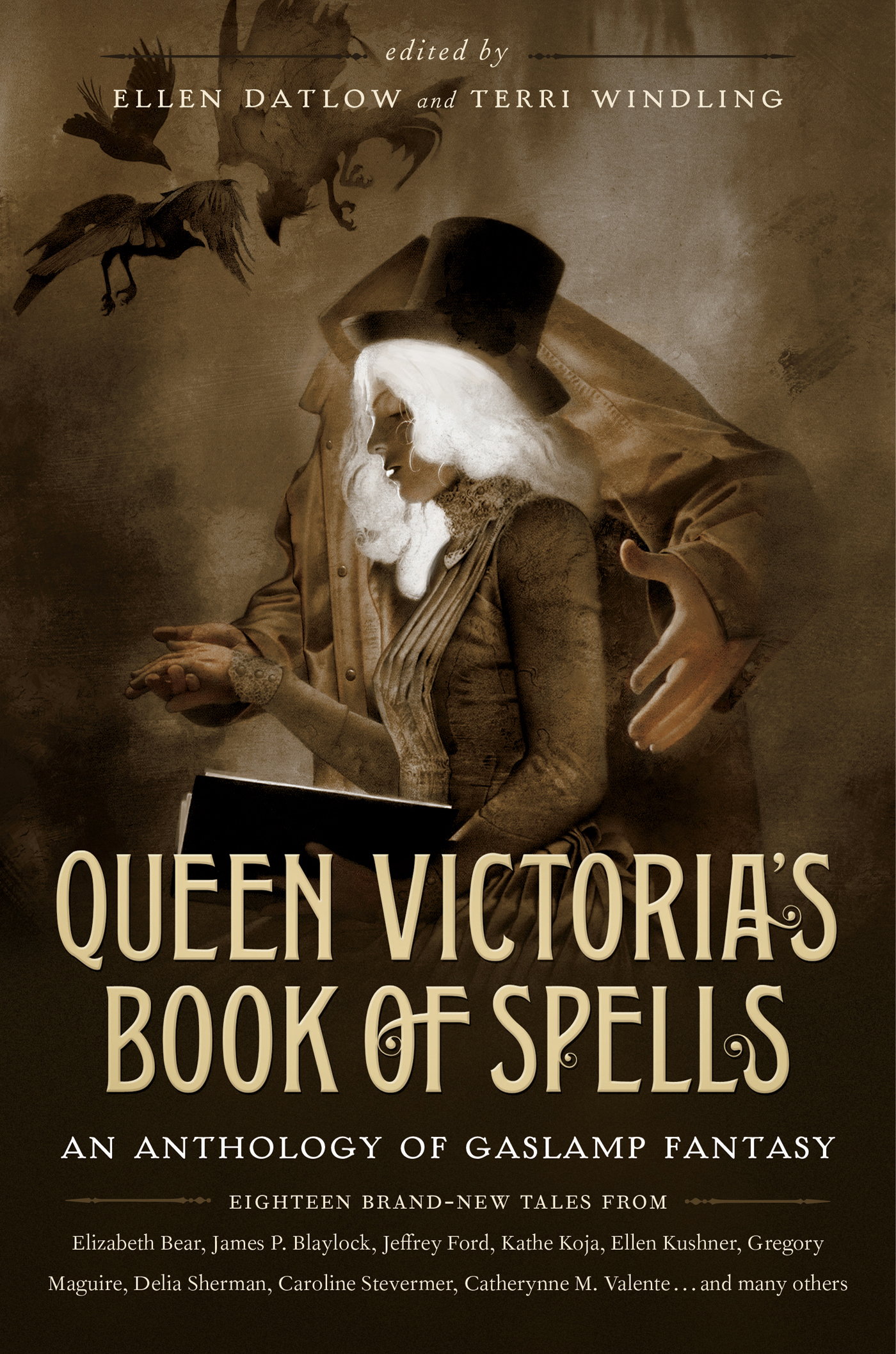
- "Queen Victoria's Book of Spells" by Delia Sherman
- "The Fairy Enterprise" by Jeffrey Ford
- "From the Catalogue of the Pavilion of the Uncanny and Marvellous, Scheduled for Premiere at the Great Exhibition (Before the Fire)" by Genevieve Valentine
- "The Memory Book by Maureen McHugh
- "La Reine d'Enfer by Kathe Koja
- "For the Briar Rose" by Elizabeth Wein
- "The Governess" by Elizabeth Bear
- "Smithfield" by James P. Blaylock
- "The Unwanted Women of Surrey" by Kaaron Warren
- "Charged" by Leanna Renee Hieber
- "Mr. Splitfoot" by Dale Bailey
- "Phosphorus" by Veronica Schanoes
- "We Without Us Were Shadows" by Catherynne M. Valente
- "The Vital Importance of the Superficial" by Ellen Kushner and Caroline Stevermer
- "The Jewel in the Toad Queen's Crown" by Jane Yolen
- "A Few Twigs He Left Behind" by Gregory Maguire
- "Their Monstrous Minds" by Tanith Lee
- "Estella Saves the Village" by Theodora Goss
I love anthologies and I love historical fiction. So this should have been an automatic win for me.
Instead it was a two-plus year slog that I finally forced myself to finish.
Queen Victoria's Book of Spells by Delia Sherman is the story of an historical researcher looking for new material on the beloved queen, when she discovers hidden material under Victoria's childhood sleep book.
From the moment her father, the Duke of Kent, died, when Victoria was eight months old, to the moment she became queen of England at eighteen, her mother and Sir John Conroy, her mother's treasurer and secretary, oversaw every aspect of her life. They developed something they called the Kensington System, after the palace King George IV had given them to live in, designed to keep the young princess safe from infection, accident, and making her own decisions.
The Fairy Enterprise by Jeffrey Ford. A man wants to make fairies. From corpses.
From the Catalogue of the Pavilion of the Uncanny and Marvellous, Scheduled for Premiere at the Great Exhibition (Before the Fire) by Genevieve Valentine. The catalog of the Great Exhibit of London.
Though robbed of much of her power outside the lands of her people, Salome is still presented veiled and shackled, and behind a guarded partition past which ladies and children shall expressly not be admitted, to preserve their moral character.
Interspersed with letters from Walter to his brother and from a Miss Hammond, which perhaps shows why there was a fire.
For the Briar Rose by Elizabeth Wein. I believe I was stuck on this story for several months, reading a few sentences and then switching to something else.
The Governess by Elizabeth Bear. This is an interesting twist on a fairy tale with which I am familiar.
The B____ children are named Charity, Constance, and Simon. Girls are expected to embody virtues, but boys may be themselves.
Smithfield by James P. Blaylock.
The desire to kill time is a criminal offence since we have little enough of it on this earth, but I very much wished to murder twelve hours of it in order to be about my business.
The Unwanted Women of Surrey by Kaaron Warren.
You know that some believe that a miasma causes cholera. I believe it is the water, and that there is one source which can be guaranteed to be full of infection. It's the Broad Street water pump. Dr John Snow has spoken of it, but he is slow to action."
HA!
Charged by Leanna Renee Hieber.
Of all my saints, Edison, in particular, engaged me. As if I were a fisherman, he called me to abandon my nets and come follow him.… I've read every word my prophet has written, followed his every move, patent, and innovation. I studied his contemporaries. I puzzled over Tesla's alternating current versus Edison's direct. The former individual is a madman. But my prophet is a cool and capable businessman. I'm a man of particular taste, and I like the word direct. It feels right. When one is talking about a conduit of energy, the matter should flow directly from source to target. To alternate is to be inconstant. I am a director.
Mr. Splitfoot by Dale Bailey. A reconstruction of the Fox sisters, notorious mediums.
Phosphorus by Veronica Schanoes.
The pathways the Bryant and May matchwomen take home from the factory every night are marked by piles of phosphorescent vomit.
Theosophists believed that sickness, suffering, deformity, and poverty were punishments for sins committed in a past life. This belief can be dressed as God's will, or as social Darwinism, but it comes to the same thing. It is a reassuring thought to those whose lives are not thoroughly saturated with such suffering.
It's easy to forget how the people who indulged in afternoon tea rituals, admired clockwork-powered inventions, and wore shapely and beautiful corsets and bustles profited from the death and suffering of others every time they lit a candle. It's easy to forget how many of them resolutely believed in social Darwinism and in the essential inferiority of all nonwhite people (among whom they counted the Irish), among other vile things.
The Vital Importance of the Superficial by Ellen Kushner and Caroline Stevermer.
Without exactly saying so directly, I assured him I would do no such thing. Miss Prism's Academy trained us well for some situations, and saying no without ever using the word was a large part of our curriculum.
The Jewel in the Toad Queen's Crown by Jane Yolen.
"She wanted to be God," the queen mused.
"Why would anyone want to be God? It's a terrible occupation."
Estella Saves the Village by Theodora Goss. Imagine the characters from your favorite Vistorian novels all gathered together in one town.
Cover by Allen Williams
Published by Tor