
Jane Lindskold
Books: Fantasy
Brother to Dragons, Companion to Owls (1994), The Buried Pyramid (2004), Child of a Rainless Year (2005)
Breaking the Wall: Thirteen Orphans (2008), Nine Gates (2009), Five Odd Honors (2010)
Firekeeper Saga: Through Wolf's Eyes (2001), Wolf's Head, Wolf's Heart (2002), The Dragon of Despair (2003), Wolf Captured (2004), Wolf Hunting (2006), Wolf's Blood (2007)
Anthologies: Dragon Fantastic (1992), Return to Avalon (1996), Earth, Air, Fire, Water (1999), Twice Upon A Time (1999), Assassin Fantastic (2001), Faerie Tales (2004), Emerald Magic (2004), Maiden, Matron, Crone (2005), In the Shadow of Evil (2005), Children of Magic (2006)
Brother to Dragons, Companion to Owls (1994)
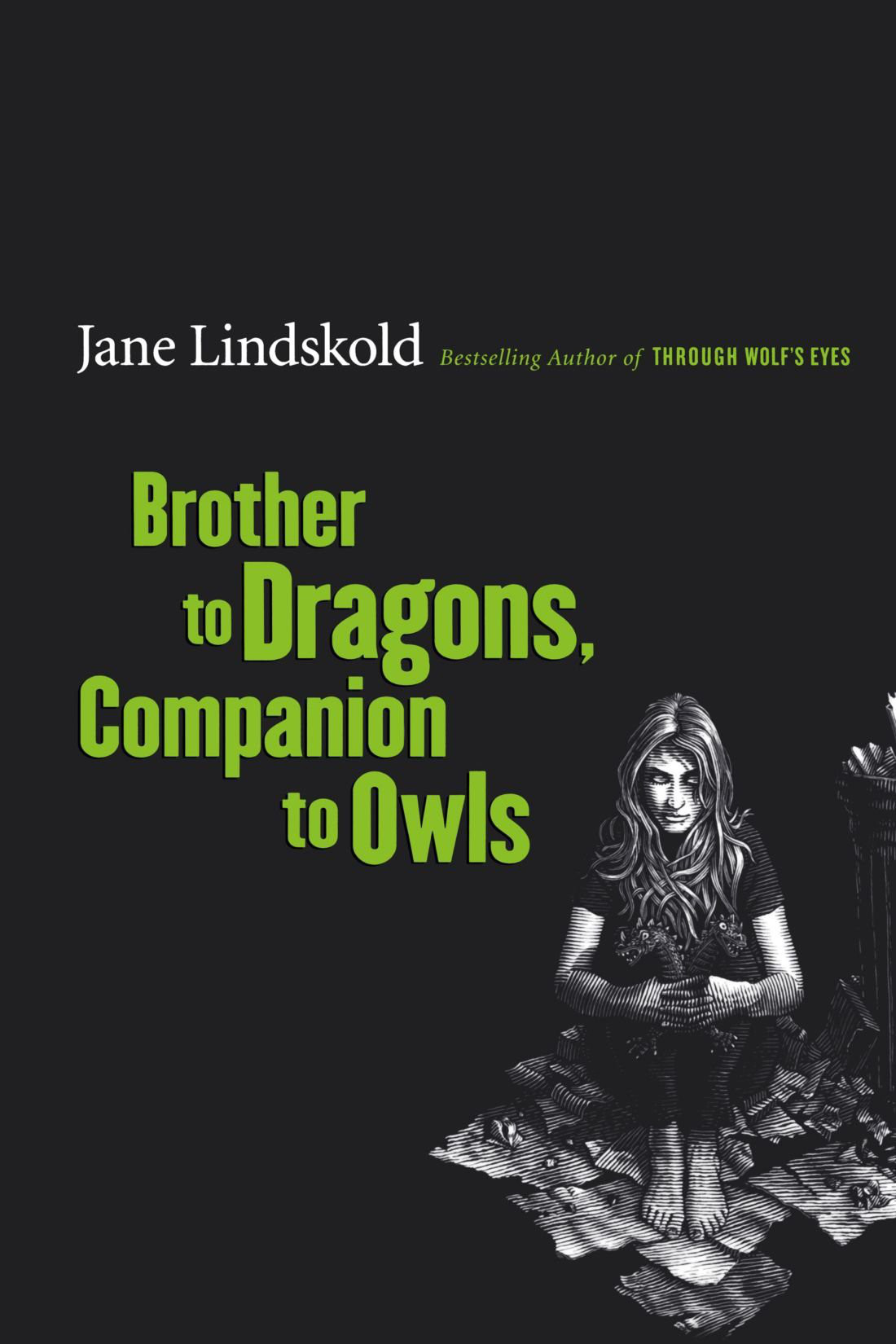 Brother to Dragons, Companion to Owls is an urban fantasy set in the future, with bits that remind me of The Velveteen Rabbit.
Sarah lives in the Home--an asylum for the insane. Her past--and even her last name--are unknown. She was initially diagnosed as autistic and mute, however, after years in the home, it is eventually discovered that she can communicate by repeating verse, such as lines from Shakespeare or the Bible, that have been read to her. Although this is at best a cumbersome method, it allows her in some small manner to communicate with those around her.
Unfortunately for her, budget cutbacks are forcing her and others from the home--diagnosed as socially functional, whether they really are or not. Sent out to survive on her own, she meets up with a member of the Wolf Clan, who take her in.
She is taken in by Head Wolf–into a group of street folk who have their own hidden home, structure, and safety. But the company isn't necessarily much different from what she had at the asylum.
His black eyes meet mine and something like lightning flashes through me. I have seen such eyes time and again in the Home. Always the clear, piercing gaze was dulled sooner or later by drugs. The Head Wolf is mad— utterly and completely mad, but it is a glorious madness.
And this home isn't necessarily going to save her from her own madness.
Memories without words are rising up and I know if I do not carefully handle them, I will be drowned.
I was browsing when I picked this up because the title looked interesting. I read the back, wasn't too impressed, and was going to put it back on the shelf when something possessed me to read the first page.
"Morning falls on the just and the unjust," I observe, and the nurse smiles politely and continues brushing my hair. Betwixt laughs from where I clutch him in my hands, Between, snores. He is not a morning dragon.
"Turn us over Sarah," Betwixt coaxes, and I do this carefully, balancing the four stubby legs in my pant leg just above the knee. Betwixt growls approvingly, "That's a good girl. Now, be a love and scratch in front of my left horn, right above the eye ridge."
I do this, studying my friend as I do. Betwixt and Between are a two-headed dragon. They are small as dragons go, standing only ten inches long from barrel chest to tail tip. They also have blue scales, red eyes, and faintly smell of strawberries.
The I turned and read the next page, and was hooked. In fact, I stayed up past my bedtime last night so I could finish reading the book.
Because Sarah has been sheltered her entire life, and is unable to read, she knows nothing of the world outside. I think what I liked most about her was that many of the new discoveries she makes are wondrous for her. Things that those around her would take for granted, she enjoys. Not that she doesn't have her share of fears, and not that her past doesn't have its share of unhappiness, but she seems to take joy in the world around her--not as part of her illness, but as part of her nature. Even the bad things that happen to her don't seem to loom large in her mind, but seem to be seen as things that happened, and then brushed aside.
Although the world is strange and complex, because Sarah has grown up completely isolated, she must discover the world as we do, and it is only slowly that we come to discover that her world is quite different from our own. It's a very subtle thing, and very well done.
What I found interesting was Sarah's view of the world. When bad things happen to her, she takes them in stride, seeming to see them as simply what happens to her. She adjusts and goes on. What is interesting is that this seems to be not an inborn trait, but a response to spending her entire life institutionalized--it was an interesting view, and I felt it was well done.
It was also a relatively short book, which I enjoyed--I appreciate authors who are able to tell a compelling story in under 300 pages, as opposed to three 700 page books.
If you're looking for something different to read, then you might want to check out Brother to Dragons, Companion to Owls. It's a relatively quick read, but an enjoyable one.
Cover by Patrick Arrasmith
Published by Orb Books
- July 2007 | Rating: 8/10
- June 2016 | Rating: 9/10
The Buried Pyramid (2004)
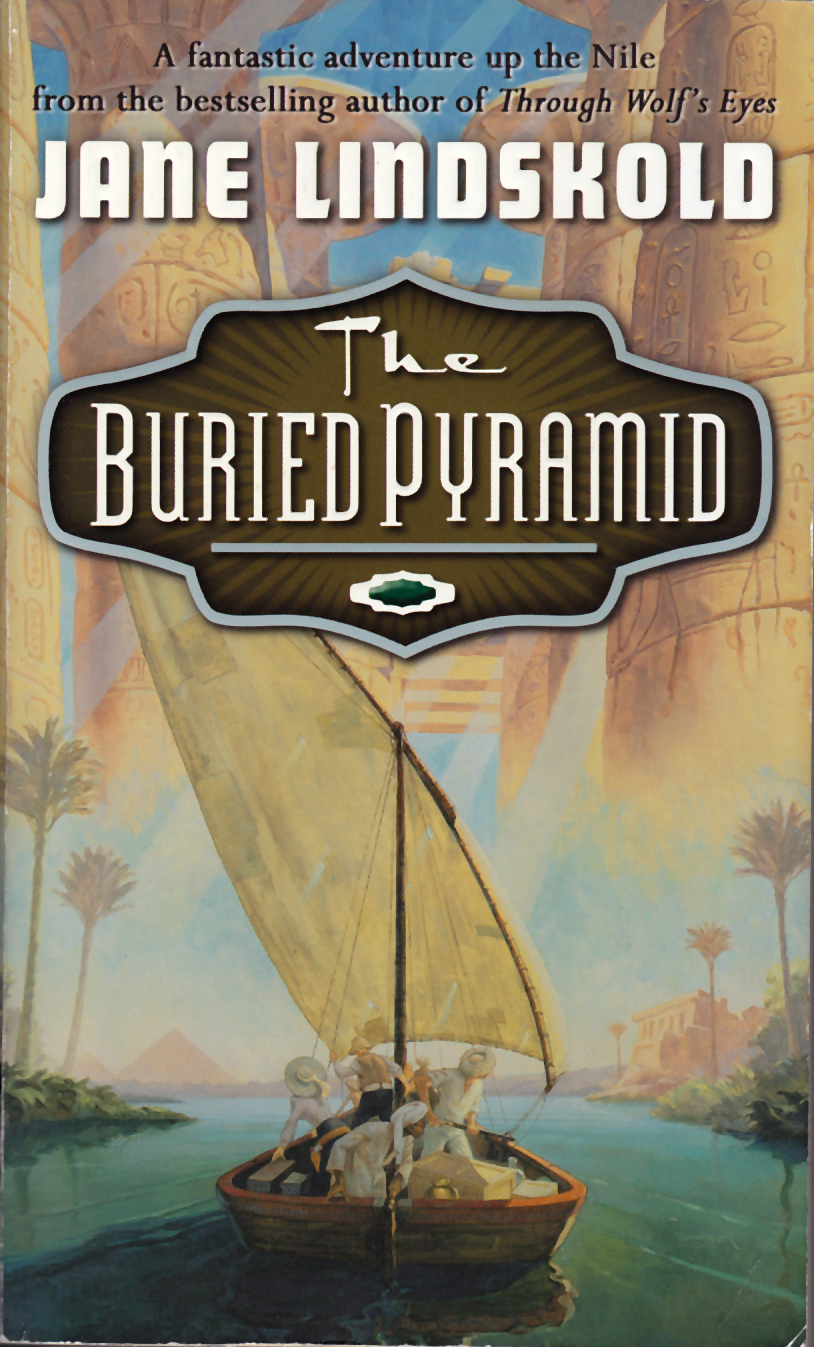 I spent the first two thirds of this book mildly wondering why it was classified as a fantasy. Then the fantasy kicked in, but I'd given up caring whether it was fantasy or historical fiction long before. I just wanted to know what happened.
Jenny Benet has been orphaned, and so is being set across the ocean where her uncle–whom she has never met-is to become her new guardian. unbeknownst to Jenny, Neville Hawthorne has been planning a return to Egypt, where on several occasions he was threatened and even harmed for taking an interest in historical sites.
One thing I particularly liked is that Jane Lindskold directly addressed the fact that many of the archaeological sites in Egypt (and elsewhere for that matter) were looted by the west, sometimes in the name of history, but often in the name of making money. Even today many of these relics still remain outside of Egypt.
The other thing I particularly liked was the fact that the characters were not black and white but were instead shades of gray. I have found that I am becoming more and more annoyed by books where the antagonist is menacingly evil seemingly for the sake of being evil. Life isn't like that, so it's nice to read books–even fantasy–that match the realities of human nature as we know it.
The characters ranged from strong and week. I figured out one of the "big secrets" relatively on, but I didn't see that Jenny or the others would have figured out this secret, so I didn't mind them being taken by surprise when the secret was revealed, even though I'd known it for the past couple hundred pages. Some of the characters were better developed Stephen, but I really liked Eddie, and wish we'd have been able to see more of his wife.
As I said, the first three quarters of the book was pretty much historical fiction sent primarily in Egypt, then the fantasy kicked in with a vengeance, and I have to admit that I thought the fantasy was the weakest part of the story. I'm not sure that the characters would accept the fantastic elements as quickly and as easily as they did, all things considered. It did make the story flow better, and would have been harder to resolve if they hadn't, but it seemed to me that they were just entirely too accepting of the surreal events happening around them.
It could also be that I felt the fantastic elements would have been easier for the reader to accept if they had been introduced earlier, but this is just a theory.
Regardless of when the fantastic elements were introduced, I still throughly enjoyed the story, and was sorry to see it end. Although some things were expected, other events went in an unexpected direction, which was a pleasant surprise.
If you're looking for an historical fantasy then you may want to check out The Buried Pyramid.
Cover by Eric Bowman
December 2007 | Rating: 7/10
Child of a Rainless Year (2005)
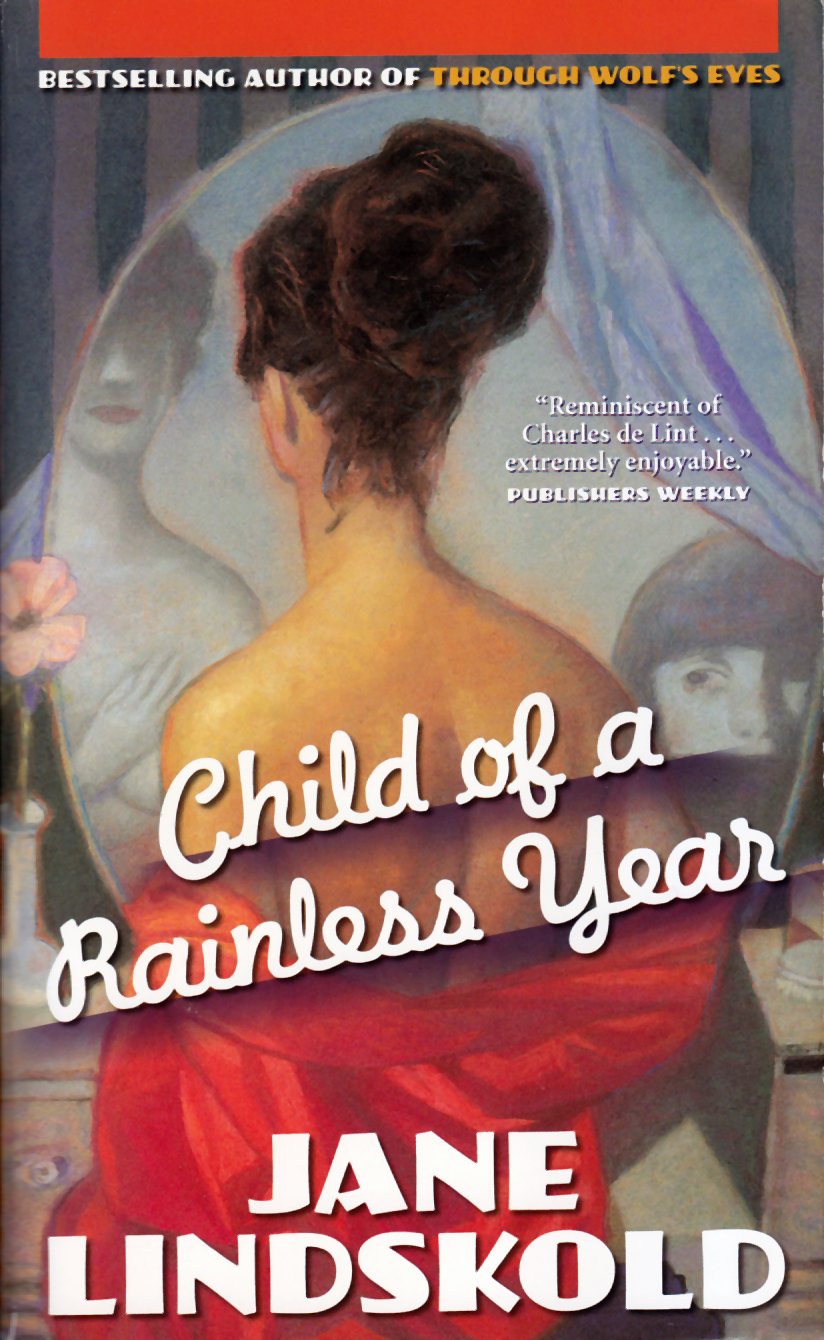 Although I have Jane Lindskold's series starting with Through a Wolf's Eyes I've never read it, because I simply haven't been in the mood for a long series. However, I picked up and read Brother to Dragons, Companion to Owls which I thought was absolutely marvelous. So I picked up Child of a Rainless Year which also looked interesting.
Mira is the only daughter of Colette Bogatyr. They live in Las Vegas, New Mexico, and Colette is very much the town eccentric, although in a seemingly harmless way: She dresses in a style more fitting to a previous century. Mira also has an unusual childhood, dressed in a style similar to her mother, and not starting school until quite late, where she discovers that her upbringing is quite different to that of the other girls in her class. Then her mother disappears and her life changes completely.
The further she goes from her time in Las Vegas New Mexico, the stranger her early childhood seems.
Especially her mother.
I watched, mesmerized, as Mother transformed herself from a pale ghost into the beauty who still commanded legions of admirers. Fear throbbed tight and hard within my chest. No longer did I want to be discovered, for I knew I had stumbled on a mystery greater and more terrible than that of Bluebeard's murdered wives. I had seen the secret magic of color, and how color made lies truth and truth lies.
I loved almost everything about this book, from the easy pace, to the mystery of Mira's life and the disappearance of her mother, to the different characters that surround Mira. Essentially, I found the book to be deeply satisfying on almost all levels.
"Our Lady of the Sorrows of Las Vegas?"
"Yes. The Virgin Mary has many mysteries. They are celebrated in the rosary. It is as ‘Our Lady of Sorrows,' though, that most Catholics love her best, because her sorrows mean she will understand our own."
Mira is fascinating for many reasons. She's a single, fifty-something woman who is described as just that: aged and carrying a little extra weight. She sounds exactly like a middle-aged woman. This was a delightful change to see such an normal looking character in fantasy. Normally in fantasy, all women are thin and gorgeous and under the age of 40. I love reading about characters who seem like someone you'd know. It's a nice change of pace from thinking that the magic in a fantasy comes from how a woman manages to stay thin and beautiful despite her lifestyle. (Not that I dislike those kinds of books, it's just that I found Mira to be a very welcome change.)
As I walked back to the House I felt thoroughly sad that I was now so old and so unattractive that I could be found alone in a man's house early in the morning and not even raise an eyebrow.
Some of my favorite bits of this story are when she finally returns to her childhood home, to find it different, but also as she remembered it.
The lock turned with a minimal amount of stiffness, and I pushed open the door, automatically reaching up for the light switch. I didn't find it, not until I adjusted and slid my hand down.
There were a few weaknesses–I would have liked to have read more of Aunt May's journals, and how reading those journals affected Mira. I also had some difficulty with the explanation of magic–I simply wasn't sure how the magic explained achieved the results achieved.
But for the most part I loved the novel and the character and the story. I found the ending to be very satisfying, and as usual, I love an author who can write a complete story in a single book.
People are more patient with strangeness when the odd person is either very rich or very poor.
This is not an adventure story, but rather a look into the past and into what makes us different from our parents. We are more than the product of our genes, more than the product of those who raised us.
We are even more than we think ourselves.
Sometimes we need beauty and grandeur to inspire us to be the best we can be— to remind us of what humans are capable of when they turn their minds to something beyond the purely practical. We have the capacity for art, for beauty. I think we should use it."
If you like Charles de Lint or Sharon Shinn, then you will definitely want to check out Child of a Rainless Year. It's a little different from much of what you find of the fantasy shelves, but very satisfying and enjoyable. As I said, this is not an adventure but an unfolding. It's also lovely and one of my favorite books by Jane Lindskold–so much of this story has taken up residence in my brain, and popped up at unexpected times. Which is what, to me, makes a good story.
Cover by Gary Kelley
Publisher: Tor Books
- October 2007 | Rating: 8.5/10
- May 2015 | Rating: 9/10
- October 2017 | Rating: 9/10
- August 2023 | Rating 9/10
Breaking the Wall
Thirteen Orphans (2008)
 I really like Jane Lindskold's writing.
Brenda Morris thinks she is simply taking a vacation with her father, but she quickly learns the trip is much more–that her father took her to California to introduce her to her magical heritage. Unfortunately, this simple trip turns dark when the man they discover the man they have come to visit has been attacked.
In their search for the attacker Brenda meets others who share her heritage–the heritage of the Thirteen Orphans. She also learns to use the powers that seem to be her birthright, even if she hasn't come into her powers just yet.
In the course of that education the story weaves together ancient Chinese history, Mah-Jong, and a debate upon the treatment of one's enemies, as well as a search for their attackers and the reason for their attack.
My only disappointment with this book is that it is clearly the first book of a series. The story arc of the book is completed, but as the book ends there is clearly more to come.
I hate waiting.
If you like urban fantasy, then I highly recommend Thirteen Orphans. The magical and and mundane worlds fit together easily, and the magical world she creates is a fascinating one–especially the story of the creation of the magical realm.
Cover by Sam Weber
Publisher: Tor
December 2008 | Rating: 8/10
Anthologies
Dragon Fantastic (1992) edited by Martin H. Greenberg
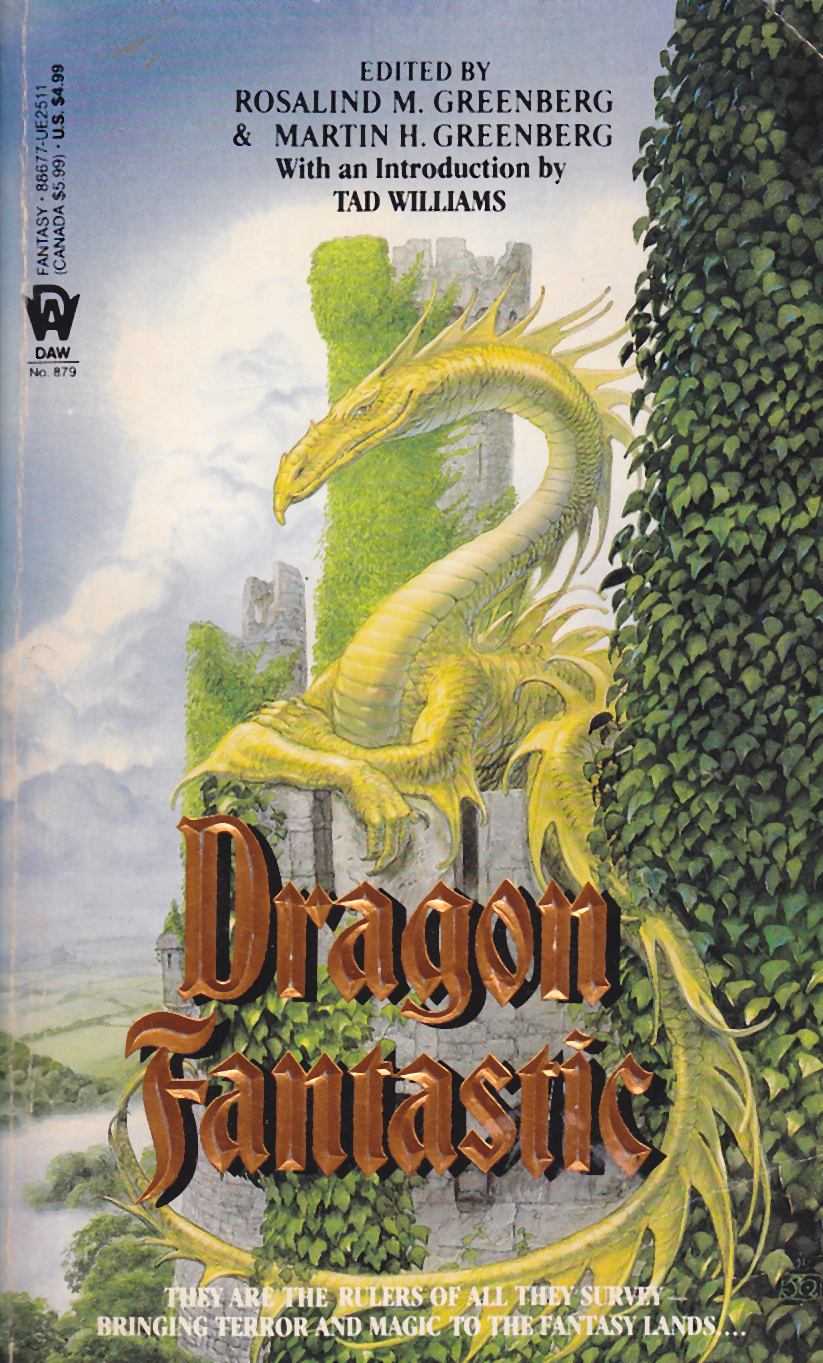 Lethal Perspective by Alan Dean Foster
- The Champion of Dragons by Mickey Zucker Reichert
- Phobiac by Lawrence Schimel
- Home Security by Karen Haber
- The Stolen Dragon by Kimberly Gunderson
- Cold Stone Barrow by Elizabeth Forrest
- Fluff the Tragic Dragon by Laura Resnick
- The Hidden Dragon by Barbara Delaplace
- Take Me Out to the Ballgame by Esther M. Friesner
- The Dragon's Skin by Ruth Berman
- Shing Li-Ung by Tanya Huff
- Concerto Accademico by Barry N. Malzberg
- Dragon's Destiny by Josepha Sherman
- Between Tomatoes and Snapdragons by Jane Lindskold
- The Trials and Tribulations of Myron Blumberg, Dragon by Mike Resnick
- Straw Into Gold, Part II by Mark A. Kreighbaum & Dennis L. McKiernan
Published by Daw
Return to Avalon (1996) edited by Jennifer Roberson
 To Light Such A Candle by eluki bes shahar
- The Grail of Heart's Desire by Judith Tarr
- Lady of Avalon by Diana L. Paxson
- With God to Guard Her by Kate Elliot
- Sing To Me Of Love and Shadows by Deborah Wheeler
- The Wellspring by Katherine Kerr
- Knives by Dave Smeds
- A Refuge of Firedrakes by Susan Shwartz
- The Hag by Lawrence Schimel
- Salve, Regina by Melanie Rawn
- Trees of Avalon by Elisabeth Waters
- Sparrow by Esther Friesner
- The Spell Between Worlds by Karen Haber
- The Stone Mother's Curse by Dave Wolverton
- Iontioren's Tale by Paul Edwin Zimmer
- Winter Tales by Adrienne Martine-Barnes
- Dark Lady by Jane M. Linskold
- The Lily Maid of Astoloat by Laura Resnick
- Guinevere's Truth by Jennifer Roberson
Published by DAW
 Earth, Air, Fire, Water (1999) edited by Margaret Weis
- Burning Bright by Tanya Huff
- The Fire of a Found Heart by Linda P. Baker
- The Forge of Creation by Carrie Channell
- How Golf Shaped Scotland by Bruce Holland Rogers
- The Giant's Love by Nina Kiriki Hoffman
- Family Secrets by Robyn McGrew
- Dvergertal (Intercourse with a Dwarf) by Nancy Varian Berberick
- An Elemental Conversation by Donald J. Bingle
- Water Baby by Michelle West
- Only As Safe by Mark Garland and Lawrence Schimel
- Out of Hot Water by Jane Lindskold
- Strange Creatures by Kristine Kathryn Rusch
- Sons of Thunder by Edward Carmien
Twice Upon A Time (1999) edited by Denise Little
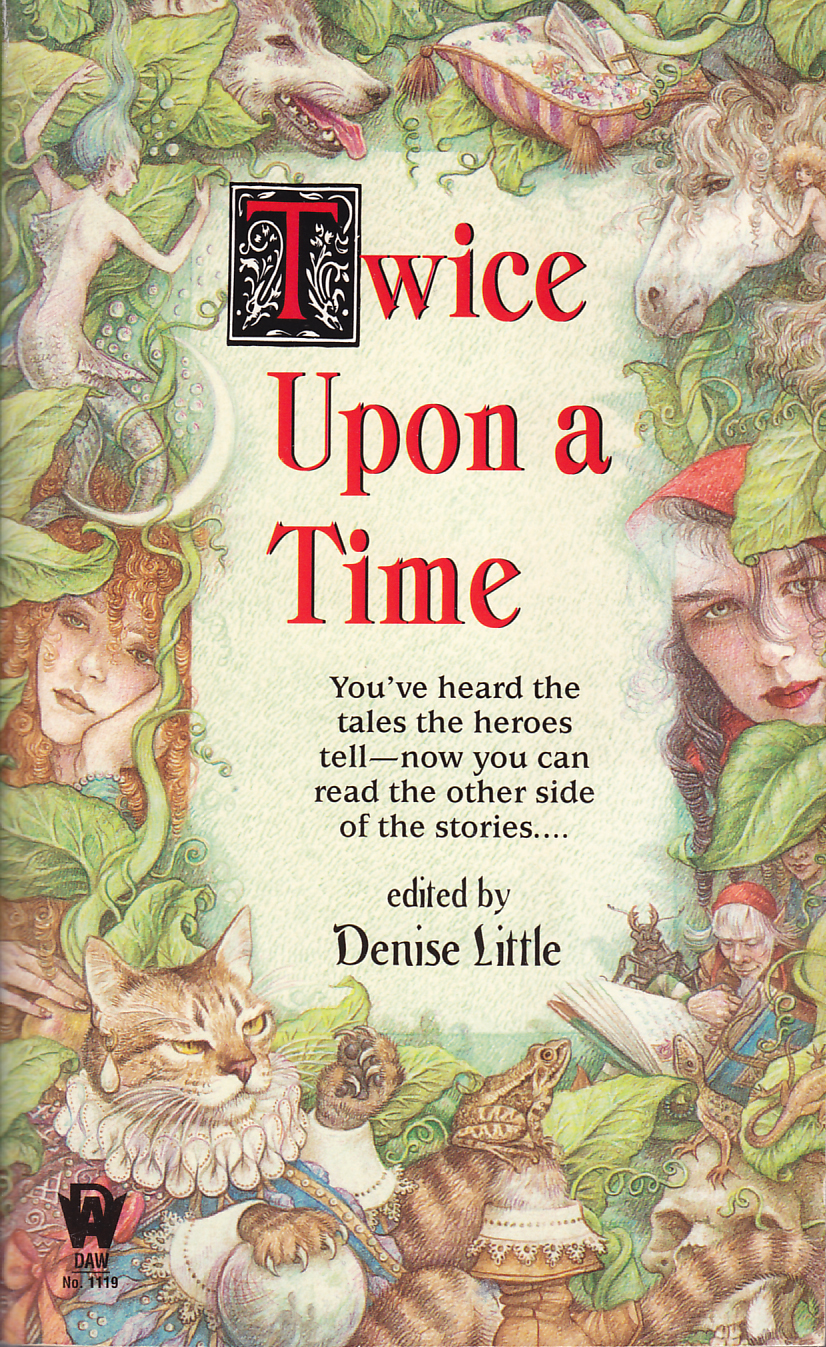 Fairy tales seen from another perspective--the wife of the giant from the story of Jack and the Beanstalk. The hunter in the tale of Little Red Riding Hood. The Wolf who appears in multiple tales.
This book is hit and miss. Some of the stories are excellent, others are so-so. The idea of retold fairy tales is an excellent one, unfortunately not all the stories in this collection were able to pull it off as well as it should be done.
(What I found interesting is that although no single story was a retelling of Hansel and Gretel, they still managed to show up in several different tales.)
- Spinning a Yarn by Jody Lynn Nye
- How I Came To Marry a Herpetologist by Nina Kiriki Hoffman
- Puck in Boots, the True Story by Connie Hirsch
- Case #285B by Esther M. Friesner
- Beanstalk Incident by Jane Lindskold
- Gilly the Goose Girl by Nancy Springer
- Fifi's Tale by Alan Rodgers
- Thy Golden Stair by Richard Parks
- True Love (Or the Many Brides of Prince Charming) by Todd Fahnestock And Giles Custer
- Savior by John Helfers
- Wolf at the Door by Lupita Shepard
- Castle and Jack by Tim Waggoner
- Baron Boscov's Bastard by Jacey Bedford
- Emperor's New (And Improved) Clothes by Leslie What
- One Fairy Tale, Hard-Boiled by P. Andrew Miller
- Feeding Frenzy or the Further Adventures of The Frog Prince by Josepha Sherman
- A Leg Up or the Constant Tin Soldier (Gonzo Version) by Gary A. Braunbeck
- Mrs. Myrtle Montegrande vs. the Vegetable Stalker/Slayer by Elizabeth Ann Scarborough
Jane Lindskold's "The Beanstalk Incident" was also a story I really liked. It relates the criminal suit against Jack (of Jack and the Beanstalk) by the wife of the Giant. This tale also looks at the story from what happened after the story ended--in this case looking at the moral character of Jack, who really doesn't come off all that well in the original story.
Rating: 5/10
Assassin Fantastic (2001) edited by Martin H. Greenberg & Alexander Potter
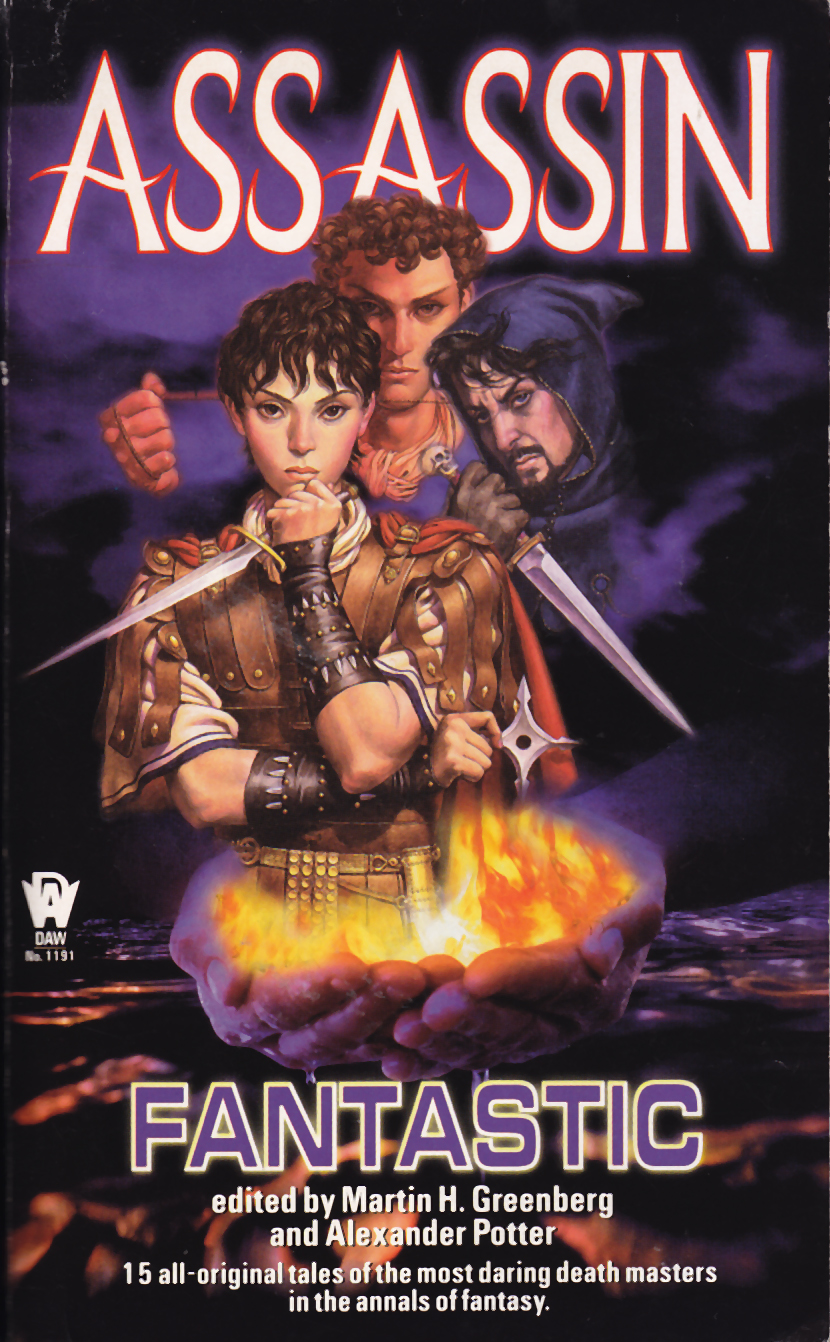 I know that Martin Greenberg puts together good anthologies, however there's something about the "Fantastic" that gets tacked onto the end of each anthology theme title that puts me off for some reason. However, I've always been fond of Assassin characters, so I picked up the book.
- Death Rites by Tanya Huff
- Green Stones by Stephen Leigh
- Coin of the Realm by Kristine Kathryn Rusch
- The Svedali Foundlings by Fiona Patton
- History and Economics by Anna Oster
- Never Say...Uh...Die? by Josepha Sherman
- Dying By Inches by Teresa Edgerton
- Darkness Comes Together by Mickey Zucker Reichert
- Raven's Cut by Lynn Flewelling
- Myhr's Adventure in Hell by P.N. Elrod
- He by Leyte Jefferson
- War of the Roses by Rosemary Edghill
- On My Honor by Bernie Arntzen
- A Touch of Poison by Jane Lindskold
- Echoes by Michelle West
Also excellent were Jane Lindskold's "A Touch of Poison" and Michelle West's "Echoes". I particularly liked "A Touch of Poison"
Watching the plump, dark-haired young widow working up to her elbows in break dough, a dusting of flour on her cute, slightly up-turned nose, no one would have guessed that Adalia Backer had sworn to kill a man--a man who trusted her.
Well, maybe I could have done without the cute nose bit, but I really enjoyed this story as well.
Published by DAW
Rating: 7/10
Emerald Magic (2004) edited by Andrew M. Greely
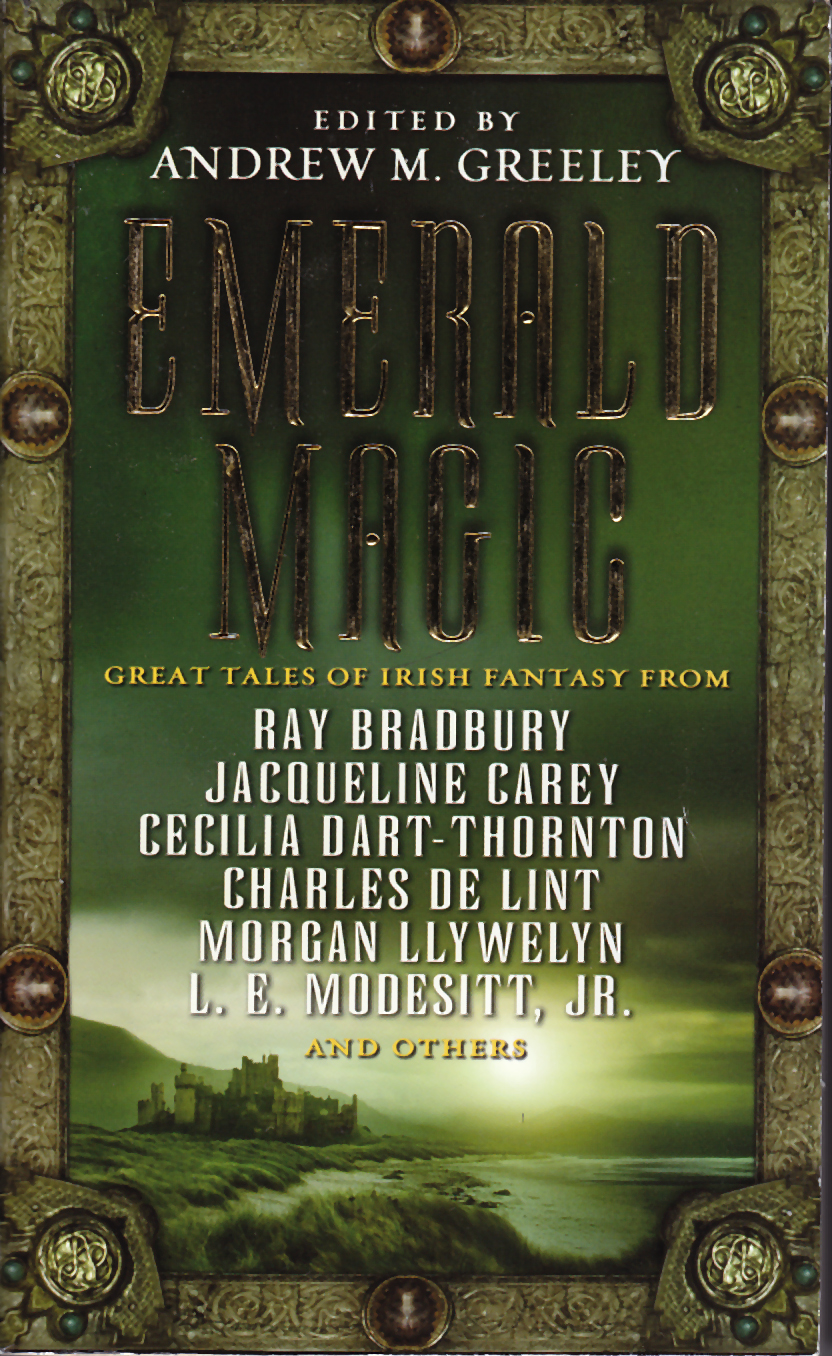 This book first caught my eye because I didn't expect to see Andrew Greeley's name in the fantasy section. Then I looked at the list of authors who wrote in this anthology: Charles de Lint, Diane Duane, Elizabeth Haydon, Morgan Llywelyn, Judith Tarr, Peter Tremayne, Jane Yolen. Even one of those names would have been enough inducement for me to pick up the book--but all those? And more!
Irish mythology, folktales, and fantasy. What more could I want?
Every story I read was excellent, although I did skip L.E. Modesitt Jr's science fiction story (I am rarely in the mood for science fiction.)
- Herself by Diane Duane
- Speir-Bhan by Tanith Lee
- Troubles by Jane Yolen and Adam Stemple
- The Hermit and the Sidhe by Judith Tarr
- The Merrow by Elizabeth Haydon
- The Butter Spirit's Tithe by Charles de Lint
- Banshee by Ray Bardbury
- Peace in Heaven by Andrew Greeley
- The Lady in Grey by Jane Lindskold
- A Drop of Something Special in the Blood by Fred Saberhagen
- For the Blood Is the Life by Peter Tremayne
- Long the Clouds Are Over Me Tonight by Cecilia Dart-Thornton
- The Swan Pilot by L.E. Modesitt, Jr
- The Isle of Women by Jacqueline Carey
- The Cat with No Name by Morgan Llywelyn
This is an anthology that I will come back and read again, so if you're wondering whether you should make the purchase, my recommendation if definitely YES!
Rating: 8/10
Faerie Tales (2004) edited by Martin H. Greenberg & Russell Davis
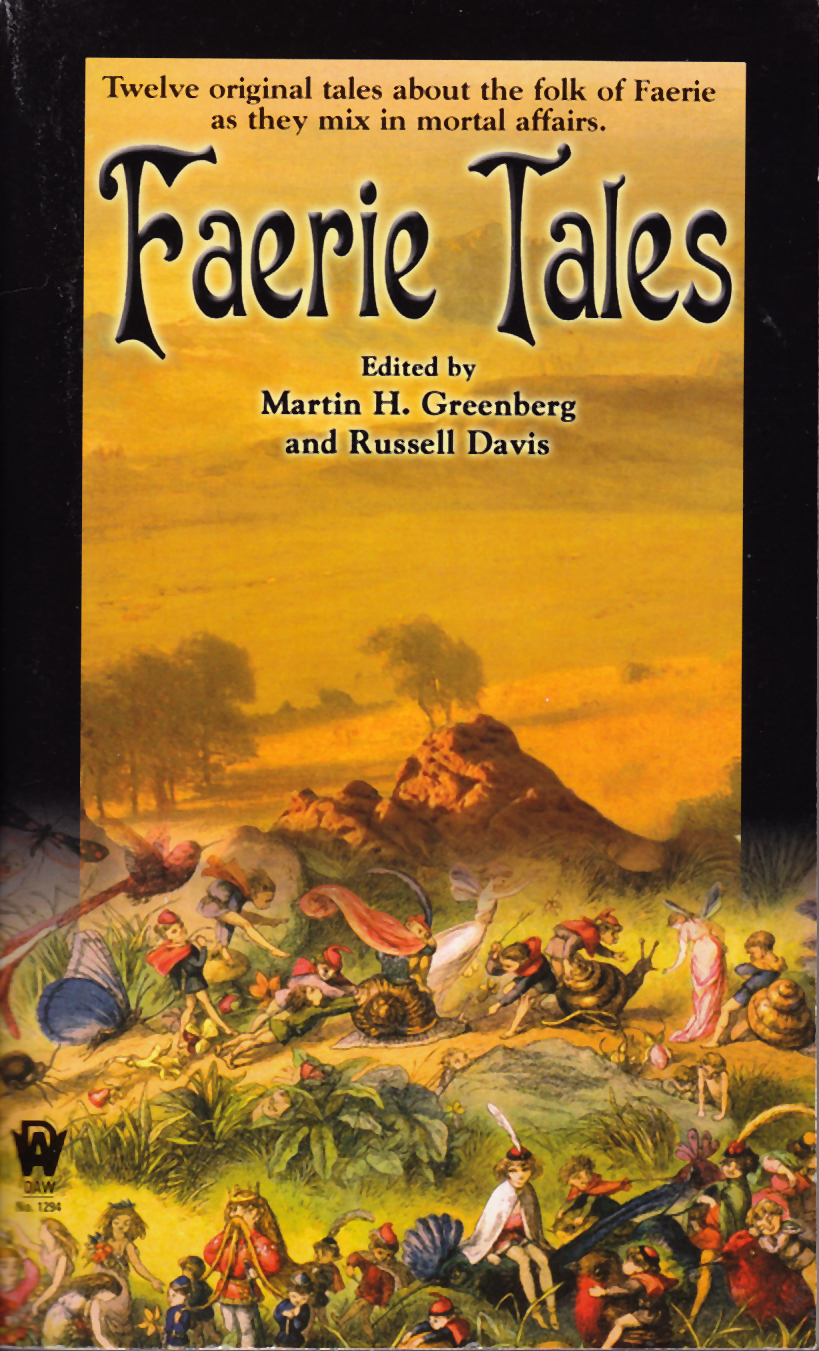 Introduction (Faerie Tales) by Russell Davis
- Sweet Forget-Me-Not by Charles de Lint
- Yellow Tide Foam by Sarah A. Hoyt
- The September People by Tim Waggoner
- Judgment by Kristine Kathryn Rusch
- Changeling by John Helfers
- He Said, Sidhe Said by Tanya Huff
- A Very Special Relativity by Jim Fiscus
- Witches'- Broom, Apple Soon by Jane Lindskold
- Wyvern by Wen Spencer
- A Piece of Flesh by Adam Stemple
- The Filial Fiddler by Elizabeth Ann Scarborough
- The Stolen Child by Michelle West
Published by Daw
Maiden, Matron, Crone (2005) edited by Martin H. Greenberg & Kerrie Hughes
 I try to pick up fantasy anthologies when I see them, since chances are they won't be there the next time I look. I picked up Maiden, Matron, Crone while ago, but saved it to read during the school year, because short story collections are much easier to put down than books.
Some of the stories in this collection were good, some were so-so, and a couple were quite excellent. And there weren't any stories that I absolutely hated, which is always a good thing. The best part of this collection, however, is that if focused on female characters, and for the most part strong female characters.
- A Lingering Scent of Bacon by Brenda Cooper
- A Choice of Ending by Tanya Huff
- Strikes of the Heart by Nina Kiriki Hoffman
- Misery and Woe by Jean Rabe
- In Sight by Charles de Lint
- The Gift by Jody Lynn Nye
- Bearing Life by Devon Monk
- Advice from a Young Witch to an Old Priestess by Rosemary Edghill
- The Three Gems of the Fianna by Fiona Patton
- The Things She Handed Down by Russell Davis
- Seeking Gold by Jane Lindskold
- Opening Her Door by Alexander B. Potter
- The Unicorn Hunt by Michelle West
Published by DAW
Rating: 6/10
In the Shadow of Evil (2005) edited by Martin H. Greenberg & Rosalind M. Greenberg
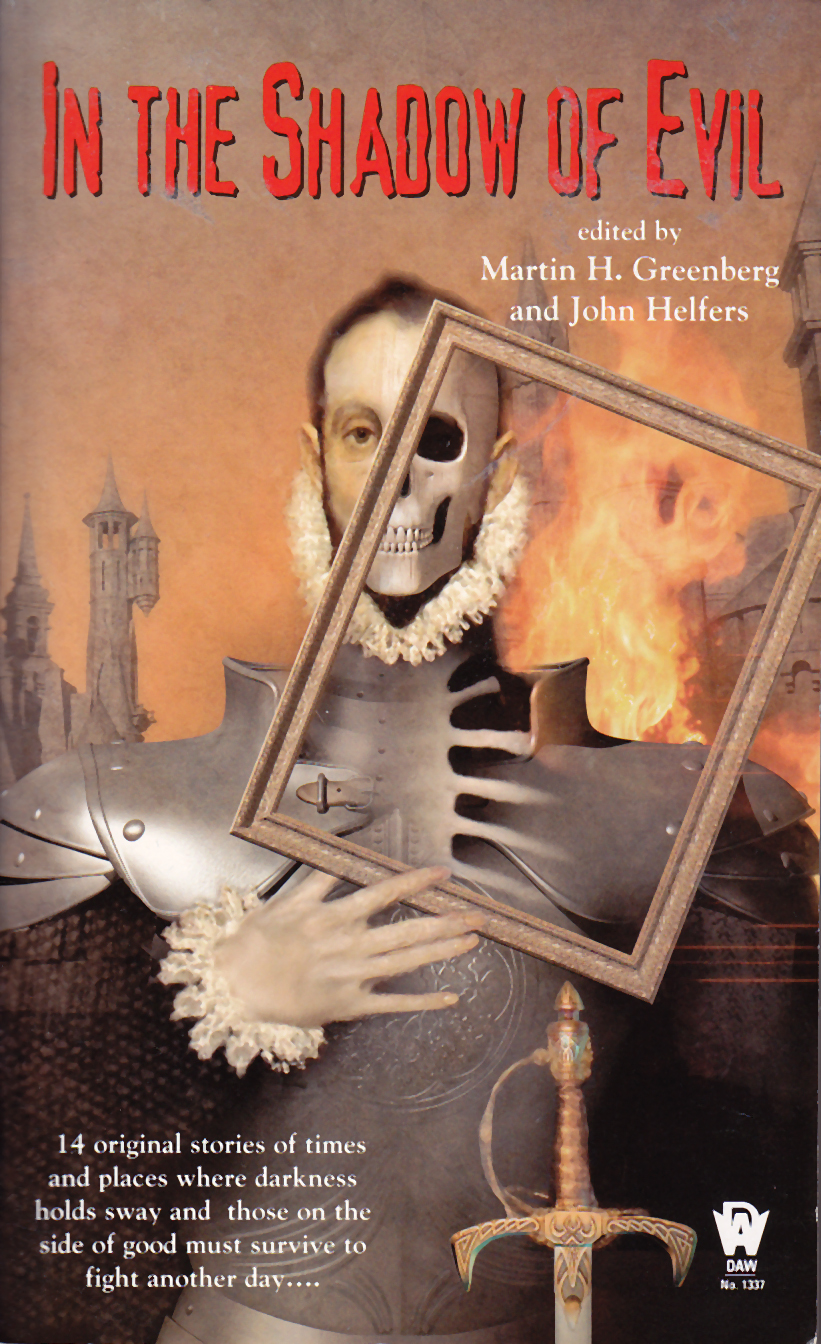 To Embrace the Serpent by Tim Waggoner
- Few of Us by Jean Rabe
- The Angel Chamber by Russell Davis
- Ineffable by Isaac Stpindel
- Flint and Iron by Rick Hautala
- Feel by Julie E. Czerneda
- Comes Forth by Jane Lindskold
- Climb, Said the Crow by Brooks Peck
- Red Star Prophecy by Mickey Zucker Reichert
- Rekindling the Light by Jody Lyn Nye
- Iraqi Heat by Gregory Benford
- Slow Poison by Tanya Huff
- The Weapon by Michelle West
- The Captain of the Dead by Fionna Patton
Published by Daw
Children of Magic (2006) edited by Martin H. Greenberg & Kerrie Hughes
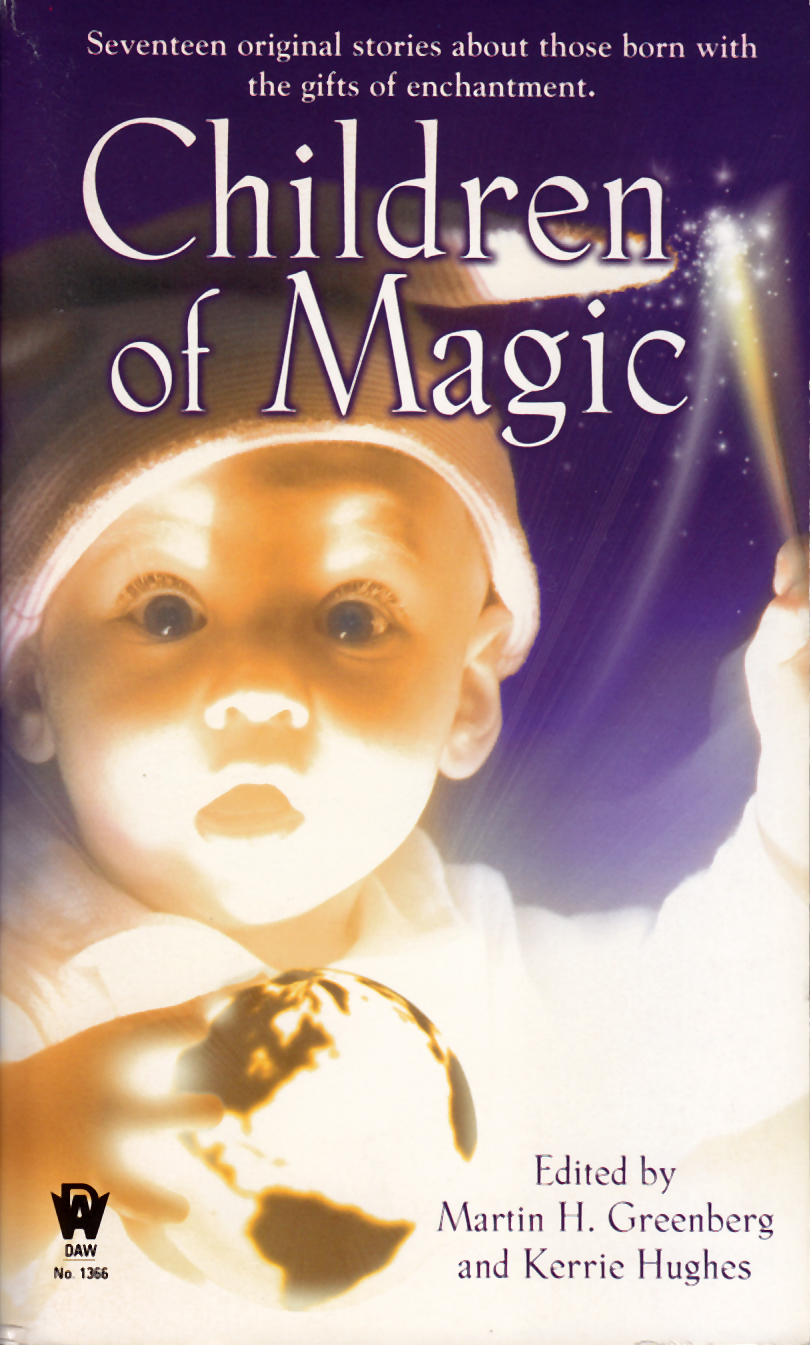 As I have mentioned on many previous occasions, I am a huge fan of short stories. Occasionally I have been disappointed, but for the most part the anthologies I have read have good, especially the one edited by Martin H. Greenberg.
The theme of Children of Magic is (as you would guess from the title) children with magic and the ability to change the world around them. The major problem with this review, however, is that I only read a one or two stories at a time, and then left the book on the headboard for a few weeks while I was reading something else (anthologies are good for that). So it actually took me several months to read Children of Magic as it dropped to the bottom of the pile in favor of whatever I was currently reading during the day (or sometimes something more boring, to put me to sleep.)
- Mr. Death Goes to Washington by Alan Dead Foster
- Nethan's Magic by Jody Lynn Nye
- Touching Faith by Alexander B Potter
- The Horses of the High Hills by Brenda Cooper
- An End to all Things by Karina Sumner-Smith
- After School Specials by Tanya Huff
- Titan by Sarah A. Hoyt
- Shades of Truth by Jana Paniccia
- The Winter of Our Discontent by Nancy Holder
- The Rustle of Wings by Ruth Stuart
- Basic Magic by Jean Rabe
- Fever Waking by Jane Lindskold
- Starchild Wondersmith by Louise Marley
- Far from the Tree by Melissa Lee Shaw
- The Weight of Wishes by Nina Kiriki Hoffman
- The Trade by Fiona Patton
- Shahira by Michelle West
Rating: 6/10