
Mercedes Lackey
Books: Fantasy
The Last Herald Mage: Magic's Pawn (1989), Magic's Promise (1990), Magic's Price (1990)
Vows and Honor: The Oathbound (1988), Oathbreakers (1989), Oathblood (1998), By the Sword (1991)
The Heralds of Valdemar: Arrows of the Queen (1987), Arrow's Flight (1987), Arrow's Fall (1988)
Mage Winds: Winds of Fate (1991), Winds of Change (1993), Winds of Fury (1993)
Mage Storms: Storm Warning (1994), Storm Rising (1995), Storm Breaking (1996)
Mage Wars: The Black Gryphon (1994), The White Gryphon (1995), The Silver Gryphon (1996)
Diana Tregarde: Burning Water (1989), Children of the Night (1990), Jinx High (1991)
Bardic Voices: Halfblood Chronicles (with Andre Norton), Lark and Wren (1992)
The Serpent's Shadow (2001)
Short Stories: Nightside (1989), Satanic, Versus (1990), Killer Byte: A Diana Tregarde Short Story (1994)

Excalibur (1995), A Magic-Lover's Treasury of the Fantastic (1998), Murder by Magic (2004), Winter Moon (2005), A Fantastic Holiday Season (2014)
By the Sword and her Last Herald Mage Series are some of my favorite high fantasy/adventure books to read and re-read. However, I have been disappointed in some of her more recent books. Her character development, especially in her earlier books, is excellent, but her later books seem to continue the same theme.
The Heralds of Valdemar
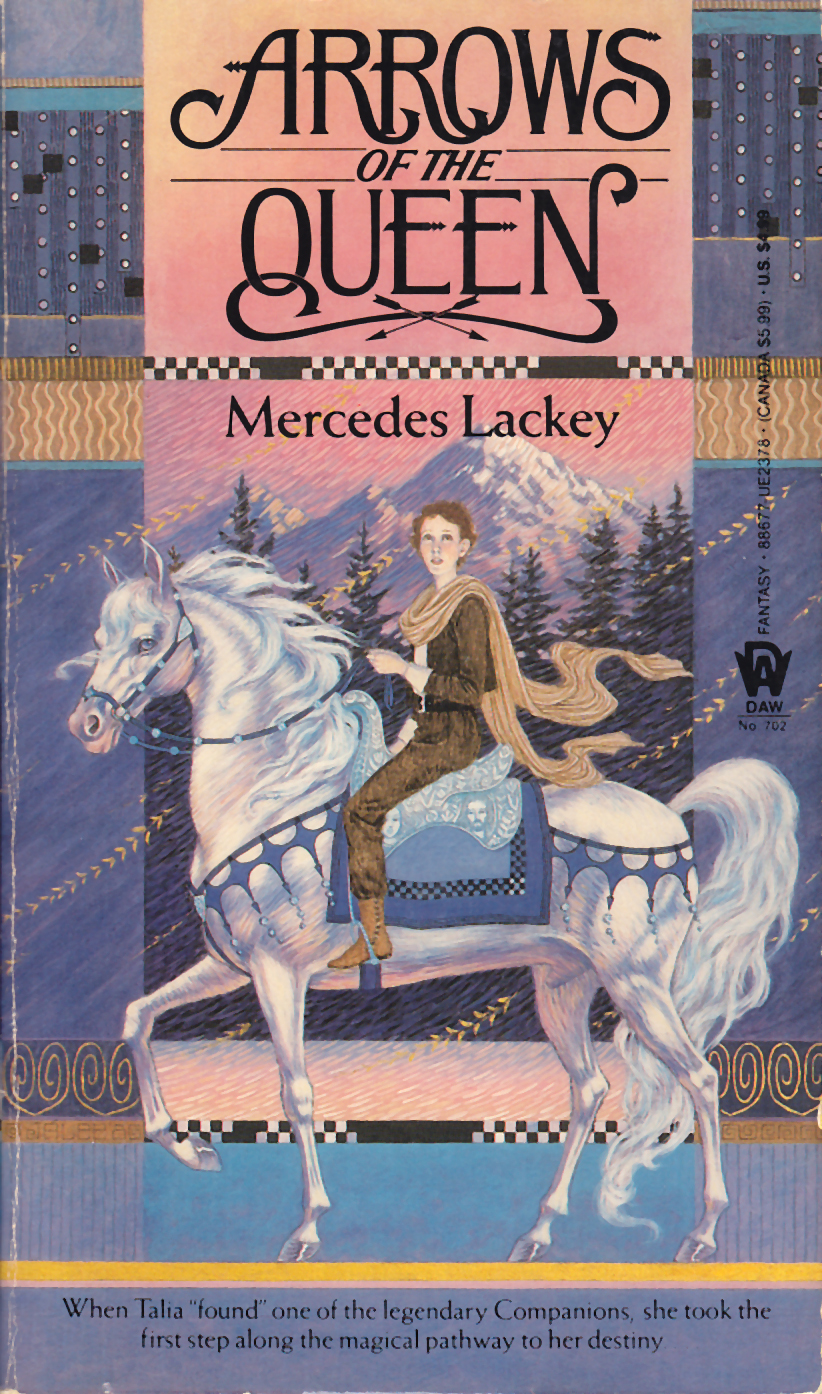
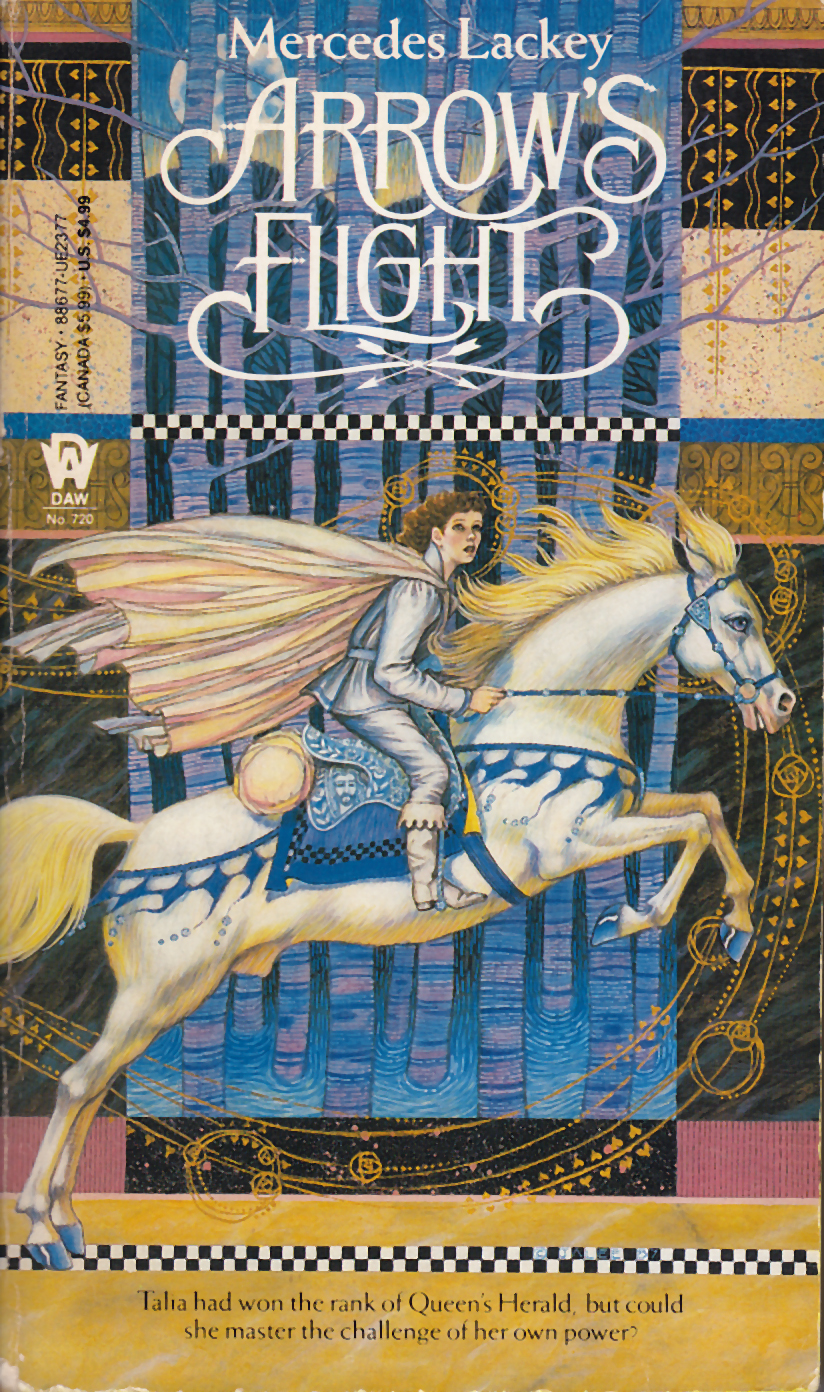
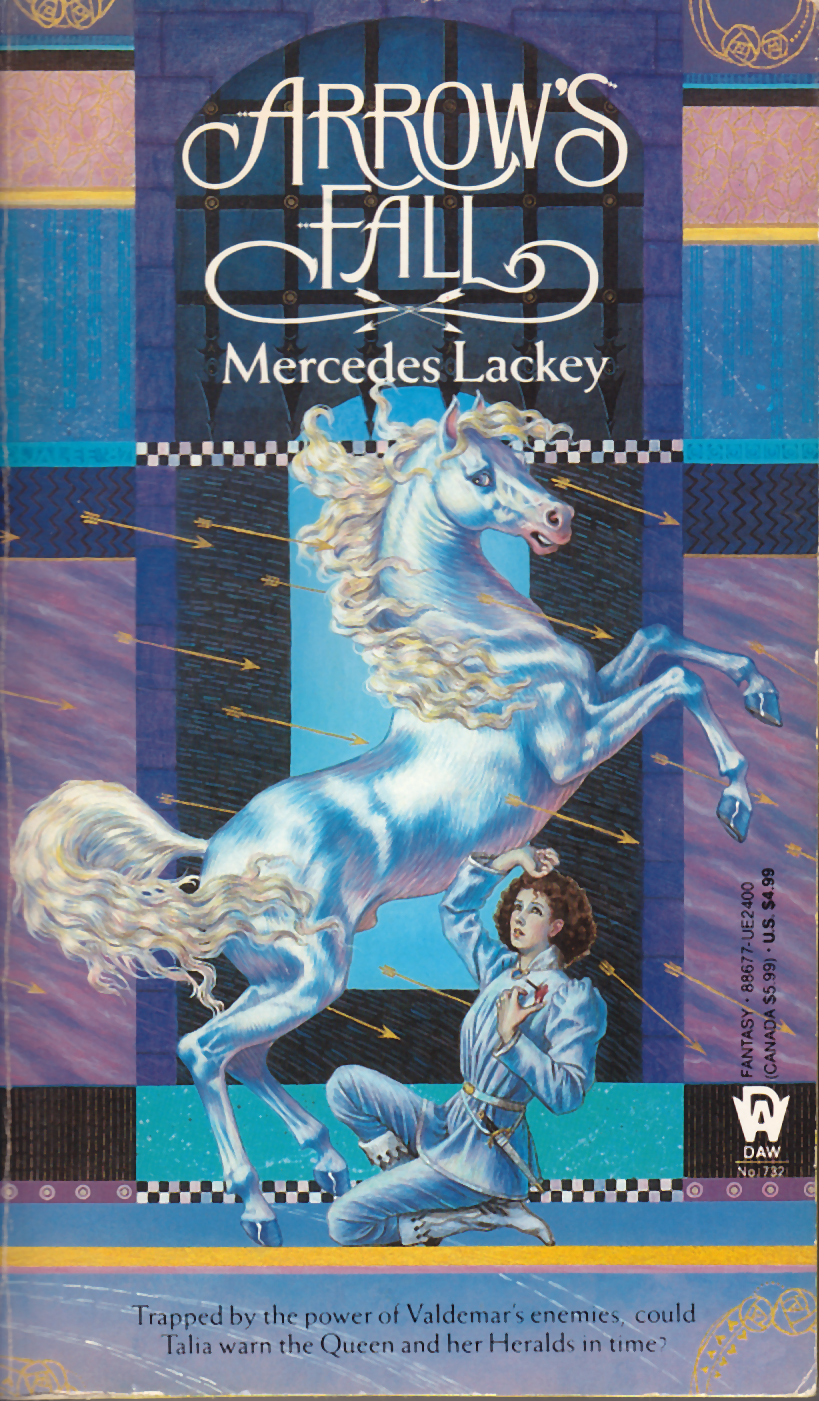
Cover by Jody Lee
The Last Herald Mage

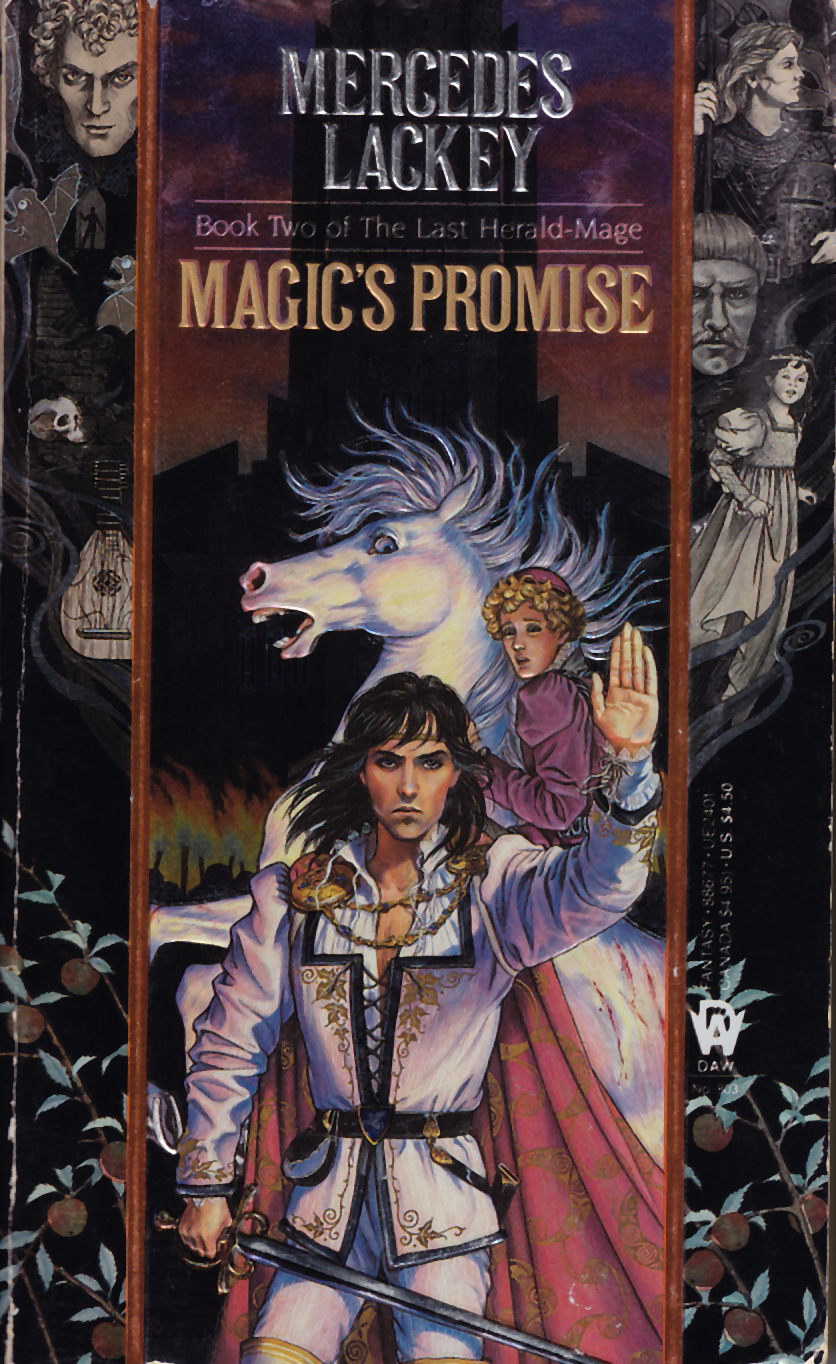

Cover by Jody Lee
Vows and Honor
Oathbound, Oathbreakers, and Oathblood
Reading Marion Zimmer Bradley's Sword and Sorceress series put me in the mood to read about Tamra and Kethry. The characters remain the same, but the three books are quite different. The first book, The Oathbound stems from Mercedes Lackey's short story sale to Marion Zimmer Bradley's Sword and Sorceress III, and contains reworked versions of short stories about Tamra and Kethry, and other short tales, reworked into a novel. Oathbreakers is a single tale, and Oathblood is a collection of short stories ranging from the first story published in S&SIII to tales taking place years after the end of Oathbreakers.
Having recently read some of the Tamra and Kethry stories in S&S, I skipped them the books, even though they were slightly different, they were not enough so that I wanted to immediately re-read the story. Given my druthers, I think I prefer the short stories to the novels. Not quite sure why, although I do have a fondness for short stories (which would explain my love for S&S as well as 'Thieves' World')
I really like Tamra and Kethry, though I have to say that I prefer Tamra the fighter to Kethry the mage. Call it personal preference if you like, or perhaps the fact that I find a sword fight is more interesting to read than a mage duel. It could also be due to the fact that Tamra has no romantic interests at all, so you don't have to worry about her getting all mushy and turning a proper adventure into a romance.
What I think is interesting about these stories is the way that she gets around the problem that some fantasy books (and many movies and TV shows) have, of the hero taking grievous wounds and walking away undaunted. yeah, you don't want to spend chapters with your hero convalescing, but it is also unrealistic and ridiculous to have the hero always escaping her adventures unscathed. The sword Need and her healing abilities are a nice way around this, although she does write in the grit and the pain and the injuries.
All in all it was a pleasant couple hours of escape.
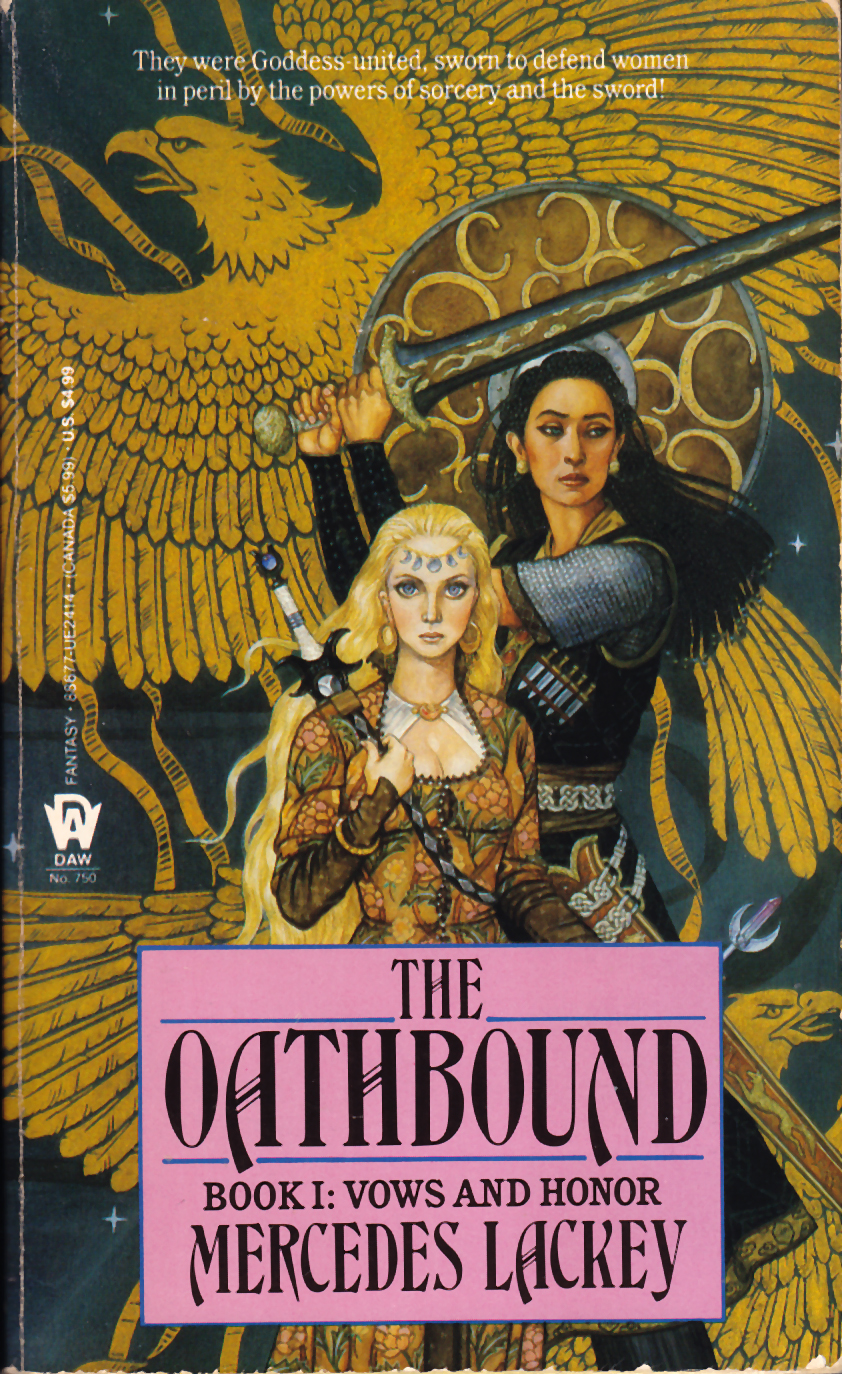
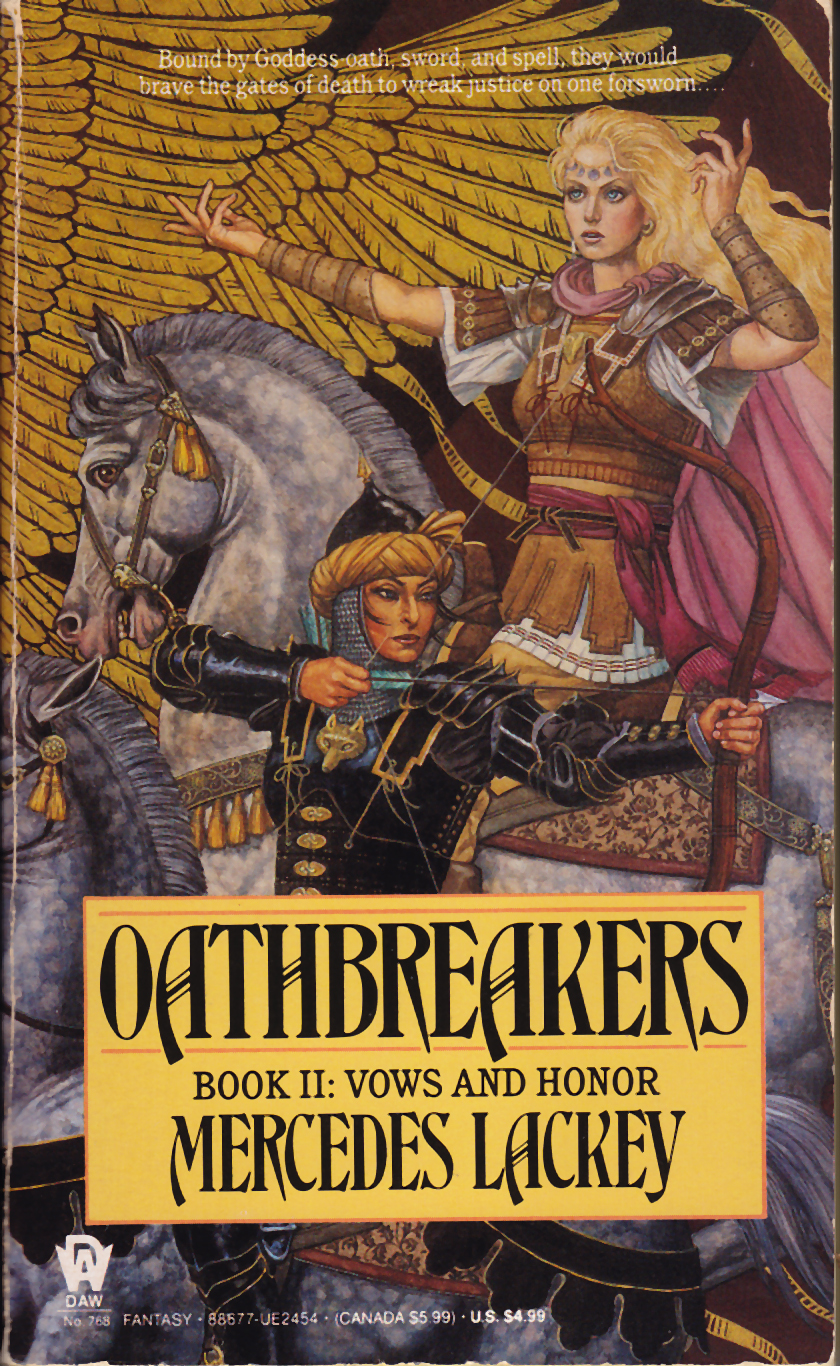
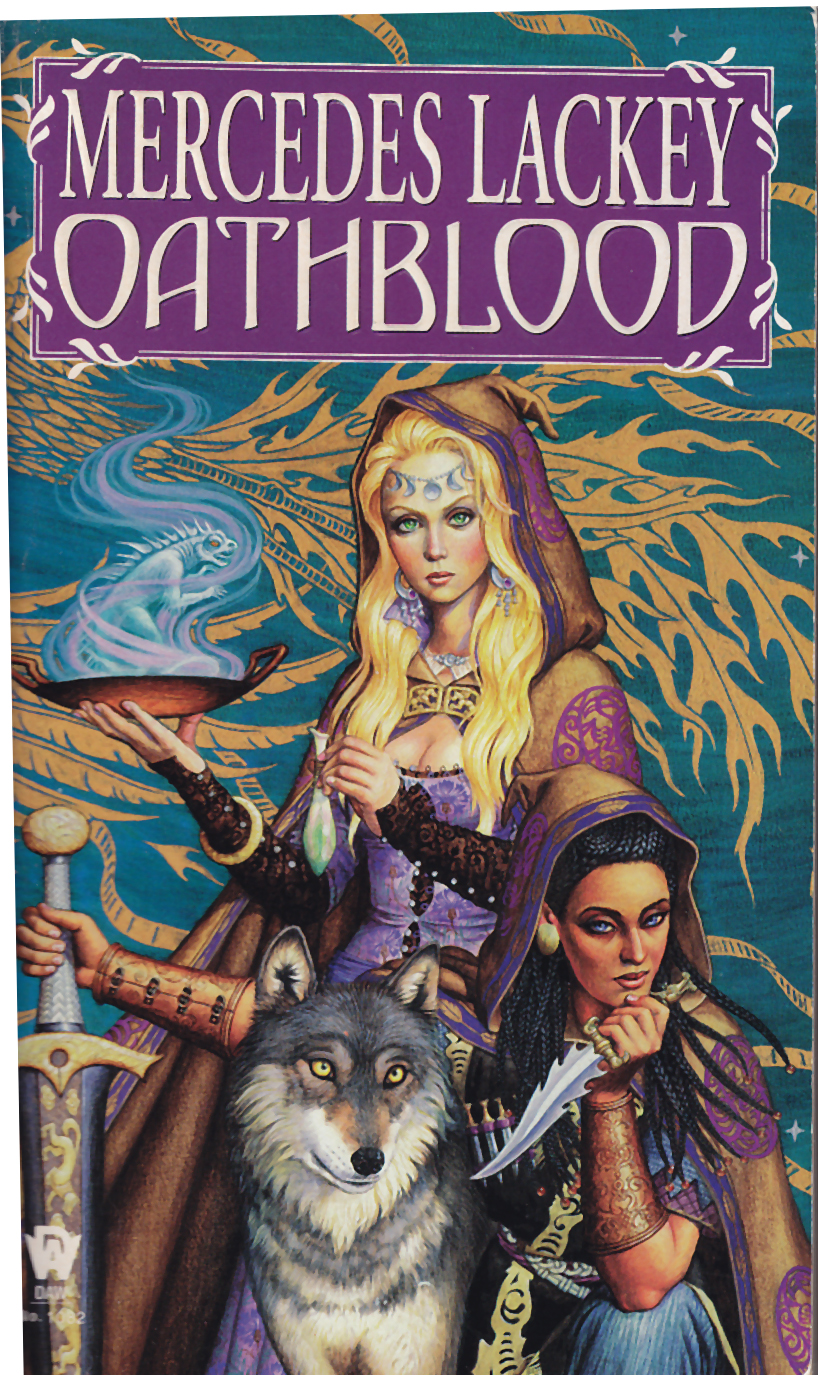
Cover by Jody Lee
By the Sword (1991)
 It's been decades since I last read this book. Partially because I haven't been much in the mood for straight-up fantasy, partially because I didn't have it as an ebook, and partially because I was afraid it wouldn't live up to my memories of it.
Kerowyn is the granddaughter of the sorceress Kethry, and has been keeping her family's house since the death of her mother. An attack on the family that leaves Kerowyn one of the few able-bodied sends her on a rescue mission that changes her life forever.
This story is in three parts: first, the rescue that changes Kerowyn's life and her martial training; second, her time as a mercenary and her meeting with the Herald Eldan; and finally her time as Captain and the war she becomes involved in.
So, how did the story hold up? Much better than I feared. The things I loved about the story are just as I remember them, first and foremost how sensible the more mundane parts of war and training are presented.
They were alert, they were armed with the kind of weapons they were most familiar with, and they looked determined. The boys had slings and bows; the old men, spears and crossbows; the women, knives, scythes, and threshing flails.
It takes Kero years of hard work to learn her fighting skills, even though she is deemed to be a natural talent–and that hard work included studying strategy and how supply lines work.
Although Kero is a mercenary, battle is not glorified, but presented as a dirty, unpleasant, and dangerous task full of waiting and uncomfortableness, including baking in the heat and freezing in the cold.
And having studied strategy, Kero uses her company in a way that works to their strengths, and tries to avoid their weaknesses.
When Kero had explained, as delicately as possible, her Company's other specialty, Selenay had given her another pleasant surprise. "You mean you're saboteurs?" she'd exclaimed with delight. "A whole Company of dirty tricksters? Bright Astera, why didn't you say that before? For Haven's sake, if anyone questions your tactics, send them to me, I'll back you!"
That doesn't mean there weren't weaknesses–for as much research and work as put into the warfare, this bit hurt my head.
Definitely not natural. Those are fresh apples, pear season is over, grapes are ripe, but cherries won't be for another moon, and apples don't ripen until fall.
Apples, pears, and grapes are all ripe August to October, while cherries are ripe late spring to early summer. It's a stupid nit to pick, but it really bothered me, since it's just so wrong; I suppose it's the disadvantage of modern grocery stories and fruit being available all seasons.
But aside from that, it really was fun to revisit the story, and discover that what I had remembered as liking so much was as strong as I remembered–especially for a book published in the very early 1990s.
Characters: Talia Sensdaughter, Queen Selenay of Valdemar, Kerowyn, Herald Dirk, Tarma, Kethry, Eldan, Need, Warrl, Dierna, Lordan, Daren, Quenten, Ancar, King Faram, Princess Elspeth of Valdemar
Cover by Jody Lee
Publisher: DAW
June 2018 | Rating: 8/10
Lark and Wren (1992)
 I read a LOT of Mercedes Lackey when I was in my 20s. Then, several years ago (and several years after I'd fallen off reading Mercedes Lackey) I all but stopped reading epic/high fantasy. Was there a single reason? Not really. The fact that high fantasy books tended to be in never-ending series full of cliffhangers was part of the reason, but I think something in my tastes changed as well. I just haven't been able to get into it.
Regardless of the reasons, when I came across the Baen Free Library and saw Lark and Wren, which I had read probably when it came out, I decided to get it another try. I remembered the basics of it, but it had been a long time, so I decided to try it again.
Rune is a bastard child who works in the inn where her mother–claiming to be a widow (a claim no one believed)–found a job soon after Rune was born. The inkeeper's wife liked Rune, and gave the young girl a fiddle after seeing her many attempts to play the instruments of the wandering minstrels who came to their inn. Unfortunately for Rune, the innkeepers wife dies, and Rune's mother decides she would like to be the new wife of the innkeeper, so things start to get unpleasant for Rune–whose only dream was to become a musician and eventually a bard.
Things happen, and Rune strikes out in her own to become a bard.
I'd forgotten that this book basically reads like two separate stories: the first half, and the second half. The first half where Rune learns to become a musician, the second half where she has become an accomplished musician, finds true lurve, and another completely different adventure happens.
It's not that the two halves of the book are bad mind you, it's just that the story takes a definite change in feel once Rune comes into her own musically. The first part is a coming of age story, the second part is a magical adventure story.
I definitely prefer the first half of the story. Not that the second half is bad per se, it's just a romance adventure which is OK.
On the other hand, I can hardly complain about having downloaded and read the story for free, can I?
May 2011 | Rating: 6/10
The Serpent's Shadow (2001)
 Myra Witherspoon is half-Indian and half-English, and has followed in her father's footsteps to become a doctor. Unfortunately for her, both her race and her gender work against her, in a society where women are still little more than possessions, and India remains a British colony. It is her determination and her magic that allow her to survive--even thrive--in a place so unlike where she grew up. The place she had to escape if she wanted to survivie.
There was so much about this book that I did like, I found it frustrating that overall the book left me with a sense of mild disappointment. I loved the integration of different mythologies and folklore: the mythology of India, the folklore of western Europe. Little bits and pieces were pulled into the story, yet managed to remain a coherent whole, just as Myra, with all her disparate parts, remains a coherent whole.
So, I liked the different bits that were added to the story. I liked the heroine, Myra. I liked the hero, Peter. The dialog was fine, as was, for the most part, the pacing of the story.
However, I hated the villain. Despite the multiple explanations, I never really saw why she did they things she did. She seemed to be acting evil solely for the sake of acting evil. Her motivations for her behaviors were unconvincing, and so I found her entire portion of the story both unbelievable and frustrating.
The same goes for the male "villain" who wasn't so much a villain as an annoyance. He was flat and uninteresting; a spoiled brat who did things because he could, and got away with them because he was rich. He was boring.
So despite the many things I did like about this book, in the end, I didn't particularly enjoy it, because the bad guys annoyed the crap out of me. There were no surprises--everything worked out precisely as I expected it to. All in all, the story just didn't hold my attention or interest.
January 2022 | Rating: 5/10
Diana Tregarde
Short Stories
Nightside (1989)
Diana Tregarde and Andre are investigating a terrible something that is eating the souls of it's victims.
Another disappointment.
June 2011 | Rating: 5/10
Satanic, Versus (1990)
As with the previous Diana Tregarde short story I got, it was ultimately disappointing.
Diana and Andre go to a romance convention masquerade and trouble happens.
I think that the root of the story would have been interesting if it hadn't been wrapped in the romance convention package. That simply felt like an opportunity to bash romance conventions and romance writers rather than an integral part of the story.
Disappointing.
June 2011 | Rating: 5/10
Killer Byte (1994)
A really long time ago–a lifetime ago it sometimes feels like–I read the Diana Tregarde books. And was quite disappointed when Mercedes Lackey stopped writing them. But as I didn't have ready access to MZB's Fantasy Magazine, I missed all the short stories. So when I ran across several for the Kindle, I decided, "why not?"
Diana's undead boyfriend spends his nights on bulletin boards, and comes across a situation he finds disturbing. Diana and Andre decided to poke into the situation and (hopefully) save someone from harm.
First things first, this story was written in 1994. And deals with computers. So it is extremely–almost insanely–dated. Dated to the point it was distracting, to be honest.
Putting that aside, the story was OK, but a little obvious (Because it was so dated? Perhaps.) and I found the romantic elements rather cloying. OK. Extremely cloying. But the banter and romantic comparisons were also dated, so that didn't help.
I'm actually rather glad I didn't come across these stories previously, because I think I would then have been unlike to read the books, which I do remember enjoying. But I suppose only a reread would tell me if it was my memory or if they were as good as I remembered.
June 2011 | Rating: 5/10
Excalibur (1995) edited Richard Gilliam, Edward E Kramer & Martin H. Greenberg
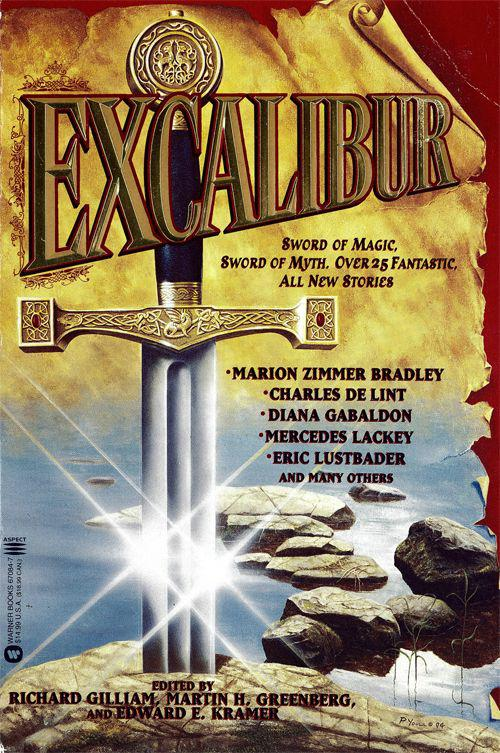
- "Prayer of the Knight of the Sword" by Nancy Holder
- "Echoes of the One Sword" by T. Winter-Damon
- "Grass Dancer" by Owl Goingback
- "All We Know of Heaven" by Peter Crowther
- "Passing" by Charles de Lint
- "Nights of the Round Table" by Lawrence Schimel
- "Here There Be Dragons?" by Marion Zimmer Bradley
- "Goldie, Lox, and the Three Excalibearers" by Esther M. Friesner
- "Silver, Stone, and Steel" by Judith Tarr
- "St. Paul's Churchyard, New Year's Day" by Richard Lee Byers
- "The Other Scabbard" by Brad Linaweaver
- "Hope's Edge" by Daniel H. Scheltema
- "The Waking Dream" by J. M. Morgan
- "The Scout, the Slugger and the Stripper" by Randy Miller
- "The Weapon" by Ardath Mayhar
- "The Sword in the Net" by Brad Strickland
- "Once and Future" by Terry Tappouni
- "Once and Future" by Mercedes Lackey
- "Sword Practice" by Jody Lynn Nye
- "Where Bestowed" by Susan Dexter
- "Demon Sword" by Bill Fawcett
- "Troubled Waters" by Susan Shwartz
- "Literary Cubism Saves the Universe" by Joe Haldeman
- "Duty" by Gary Gygax
- "The Epilogue of the Sword" by Darrell Schweitzer
Publisher: Aspect
A Magic-Lover's Treasury of the Fantastic (1998) edited by Margaret Weis
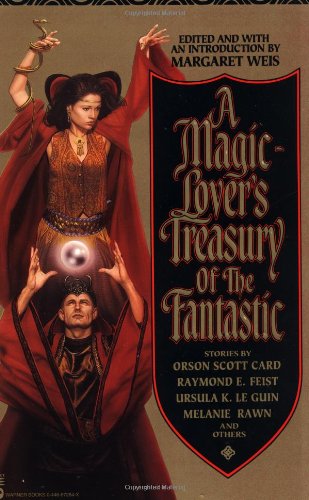
- Gwydion And The Dragon by C.J. Cherryh
- Misericorde by Karl Edward Wagner
- The Barbarian by Poul Anderson
- The Silk And The Song by Charles L. Fontenay
- Mirror, Mirror On The Lam by Tanya Huff
- Chivalry by Neil Gaiman
- Firebearer by Lois Tilton
- The Bully And The Beast by Orson Scott Card
- A Time For Heroes by Richard Parks
- The Cup And The Cauldron by Mercedes Lackey
- The Lands Beyond The World by Michael Moorcock
Published by Aspect
Murder by Magic (2004) edited by Rosemary Edghill
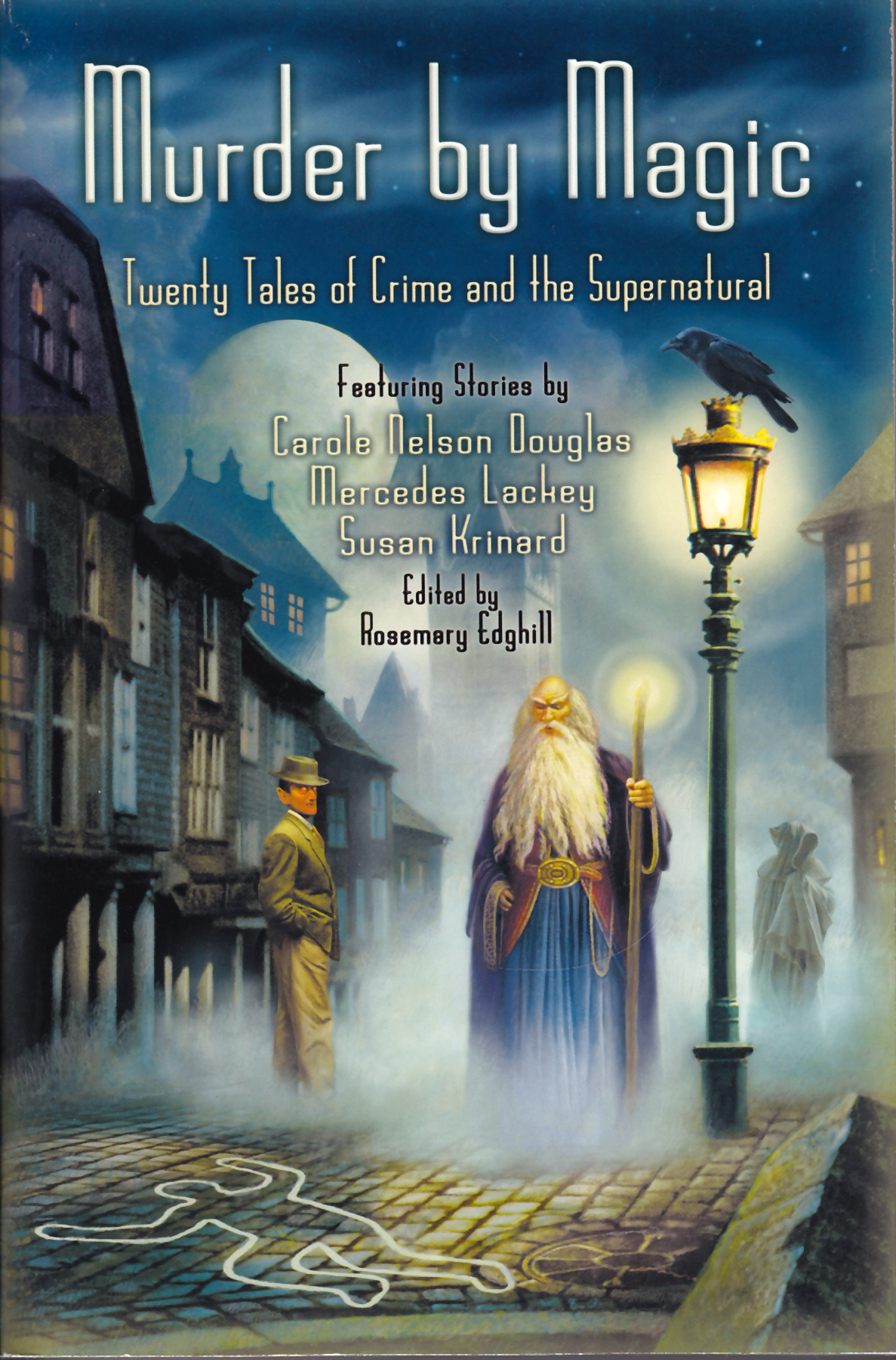 I love fantasy, and I love mysteries, so I figured that this should be a great short story collection. After all, I've read some excellent fantasy mysteries recently, such as those written by Charlaine Harris and Simon R. Green. This collection, however, was a mixed bag. For one thing, it look me about three months to read. I'd zip through a couple of stories, and then get bogged down in a story that took days to read, and then I set it aside for something else that looked more interesting.
The problem with several of the stories seemed to be that the ability to write good fantasy does not mean the ability to write good fantasy, and vice versa.
But there are some excellent stories in this collection.
- "Piece of Mind"" by Jennifer Roberson
- "Special Surprise Guest Appearance by..." by Carole Nelson Douglas
- "Doppelgangster" by Laura Resnick
- "Mixed Marraiges Can Be Murder" by Will Graham
- "The Case of the Headless Corpse" by Josepha Sherman
- "A Death in Working" by Debra Doyle
- "Cold Case" by Diane Duane
- "Snake in the Grass" by Susan R. Matthews
- "Double Jeopardy" by M.J. Hamilton
- "Witch Sight" by Roberta Gellis
- "Overrush" by Laura Anne Gilman
- "Captured in Silver" by Teresa Edgerton
- "A Night at the Opera" by Sharon Lee and Steve Miller
- "A Tremble in the Air" by James D. Macdonald
- "Murder Entailed" by Susan Krinard
- "Dropping Hints" by Lawrence Watt-Evans
- "Au Purr" by Esther M. Friesner
- "Getting the Chair" by Keith R.A. DeCandido
- "The Necromancer's Apprentice" by Lillian Stewart Carl
- "Grey Eminence" by Mercedes Lackey
Rating: 5/10
Grails: Quests of the Dawn (2004) edited by Richard Gilliam and Martin H. Greenberg
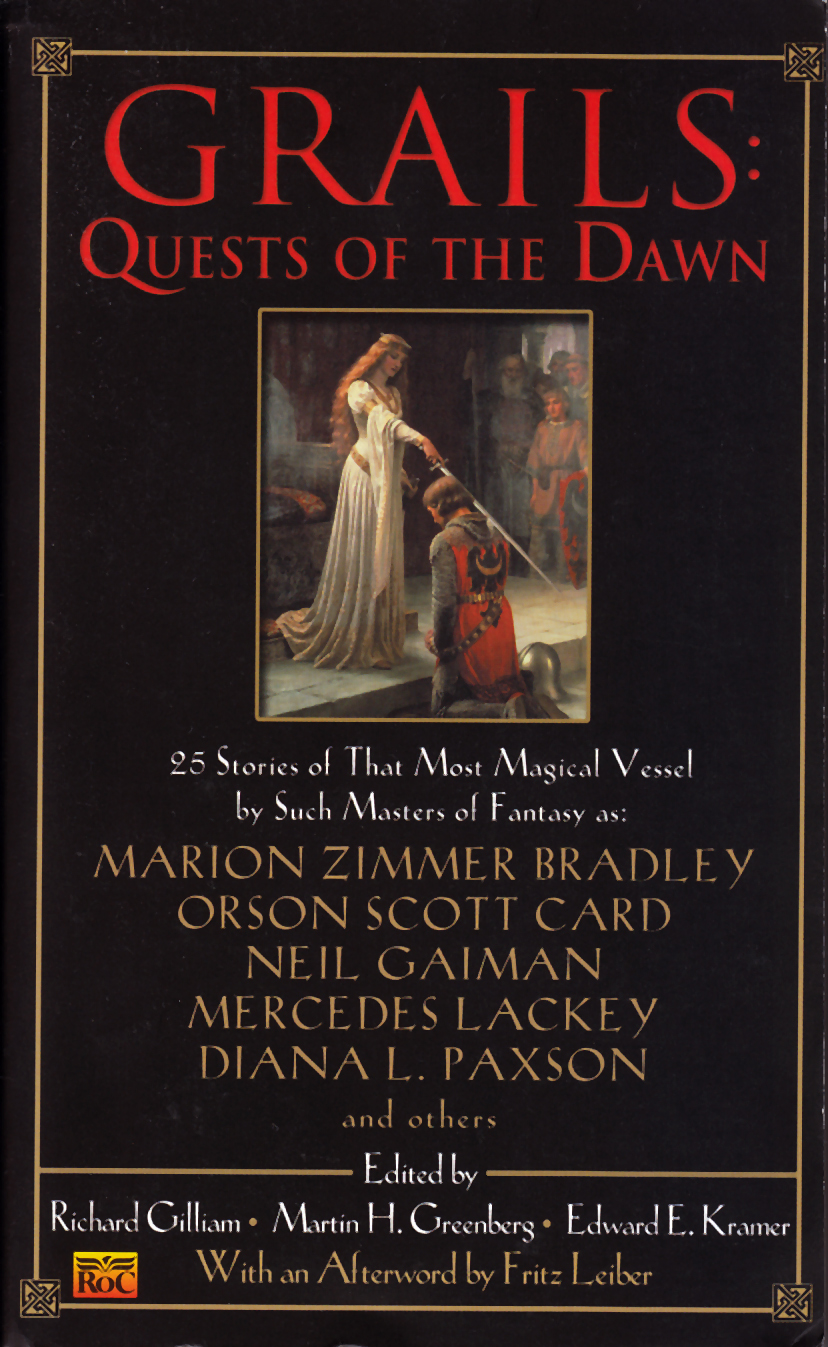
- The Question Of The Grail by Jane Yolen
- The Cup And The Cauldron by Mercedes Lackey
- The Which Overfloweth by Andre Norton
- Chalice Of Tears, Or I Didn't Want That Damm Grail Anyway by Marion Zimmer Bradley
- The Feast And The Fisher King by Diana L. Paxon
- The Gift Of Gilthaliad by Brad Strickland
- Curse Of The Romany by Ilona Ouspenskaya
- Dagda by James S. Dorr
- The Sailor Who Sailed After The Sun by Gene Wolfe
- Water by Lee Hoffman
- What You See... by Alan Dean Foster
- Storyville, Tennessee by Richard Gilliam
- Somewhere In Her Dying Heart by Lisa Lepovetsky
- Hell-Bent For Leather by Jeremiah E. Phipps
- Atlantis by Orson Scott Card
- Invisible Bars by Dean Wesley Smith
- That Way Lies Camelot by Janny Wurts
- Hitchiking Across An Ancient Sea by Kristine Kathryn Rusch
- Visions by Lawrence Watt-Evans
- The Awful Truth In Arthur's Barrow by Lionel Fenn
- Reunion by Brian M. Thomsen
- Quest Now by Margo Skinner
- Chivalry by Neil Gaiman
- Falling To The Edge Of The End Of The World by Bruce D. Arthurs
- Greggie's Cup by Rick Wilber
- The Grail Legend: An Afterword by Fritz Leiber
Winter Moon (2005)
 Winter Moon contains three novellas all centered around the moon: Moontide by Mercedes Lackey, The Heart of the Moon by Tanith Lee, and Banshee Cries by C.E. Murphy. Moontide and Heart of the Moon are traditional fantasies, while Banshee Cries is an urban fantasy set in the modern world where magic--or power--is just out of the sight of most people.
Mercedes Lackey's Moontide tells the story of Moira, whose father sent her away to Countess Venerable to be finished because he had no interest in dealing with her himself. But now she has been recalled to her fathers keep, and so she must determine why she has been called back, and whether her father is involved in treachery.
It's been several years since I've read a Mercedes Lackey book, and somehow I had managed to forget how much I enjoy her writing. What I particularly liked about this story was the way that the keep became a character in the story. The stone building is as integral to the story as Moira. But most important is Moira. Although she has some power, as a female she is very much at the mercy of her father, and must use cunning and wit to circumvent him. Like other books in the Luna line, this is a romance, except that the fantasy is primary and the romance is secondary. And it isn't a kissing story.
The only thing I find it important to mention is that these three stories are quite different. They are a good overview of the scope of the Luna line, but the thing holding this collection of novellas together is the theme of the winter moon. Not a similarity in theme or style.
If you have not read a Luna book before, I would highly recommend Winter Moon. This stories in this book are a good overview of the variety in the Luna line, and although not everyone will enjoy all three stories, there is such a variety in these stories that most readers should find something here to enjoy.
Rating: 7/10
A Fantastic Holiday Season: The Gift of Stories (2014) edited by Kevin J. Anderson & Kieth J. Olexa
 I picked this collection up solely for the Patricia Briggs story, but once I saw some of the other authors, read through the stories that interested me (but skipped the ones that didn't grab me after a page or two).
- "Naughty & Nice" by Kevin J. Anderson
- "Close Knit" by Nina Kirki Hoffman
- "Astronaut Nick" by Brad R. Torgersen
- "The Longest Night" by Mercedes Lackey
- "Jimmy Krinklepot and the White Rebels of Hayberry" by Quincy J. Allen
- "Midnight Trains" by Kristine Kathryn Rusch
- "A Christmas Feast" by Jonathan Maberry
- "A World Done In by Great Granny's Grateful Pie" by Ken Scholes
- "Santa's Mortuary" by Heather Graham
- "Yes, Virginia2097c, There is a Santa Claus" by Sam Knight
- "Christmas Eve at Harvey Wallbanger's" by Mike Resnick
- "The Atmosphere for Miracles" by David Boop
- "A Sufficiently Advanced Christmas" by Eric James Stone
- "Unappreciated Gifts" by Patricia Briggs
"The Longest Night" by Mercedes Lackey was a story I read more than a couple pages of, but just couldn't get into, so I eventually skipped on.
This is a decent collection with something for everything, even if all the stories don't appeal to everyone.
Published by WordFire Press
Rating: 8/10